

Mary Townsend’s life was short but bright. The curious girl was born in Philadelphia and grew up here in a Quaker family. As a child, she became interested in insects and studied them at home. She had a serious medical condition. The girl lost her sight and eventually her ability to move without help.
However, she learned to write in braille and published several books. Mary was not only engaged in studying insects, but she was also an outspoken opponent of slavery. Read more about her life and accomplishments in the article at philadelphia1.one.
The Townsend family
Mary was born in Philadelphia on May 14, 1814. Her parents were Quakers. Her father was a watchmaker and druggist. Her mother served as a minister. The Townsend home was located next door to the house of Benjamin Franklin.
The family was not wealthy, but everyone in it received a quality education and was a respected citizen of Philadelphia. The Townsends had 12 children, but only seven of them reached adulthood. Unfortunately, the majority of them had very poor health.
Mary was a sickly girl from an early age. She spent a great deal of time in bed. At the time, doctors were unable to adequately diagnose diseases, making it impossible to receive the necessary treatment.
However, when Mary didn’t feel ill, she was energetic and inquisitive. As a child, she had a genuine interest in insects. She read extensively about them and tried to undertake her first experiments. Also, as a youth, Mary joined the anti-slavery movement. She met other activists of the Philadelphia abolitionist movement and supported them in any way she could.
Science and creative work
Over time, Mary’s health deteriorated. After the age of 20, she was forced to spend increasingly more time in bed. In addition, the girl started to lose her sight. The doctors were unable to help her. However, Mary was not someone who gave up or backed down in the face of difficulty.
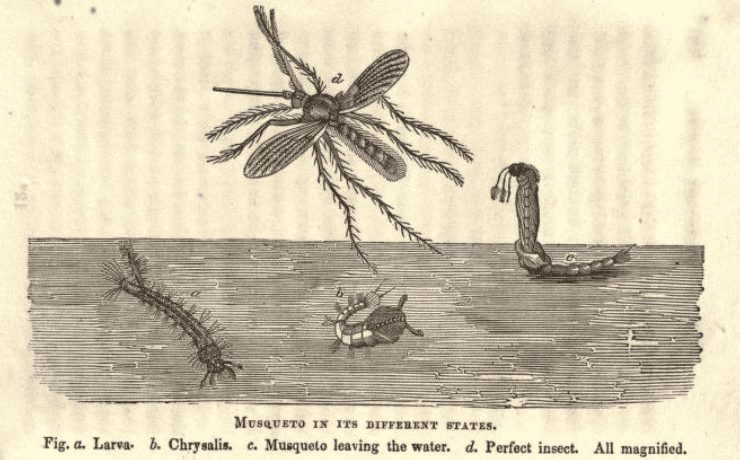
She learned to write by using special braille-like cards. With their help, the talented girl authored the book “Life in the Insect World”. The work was published anonymously in 1844 and consisted of 20 chapters containing the following information:
- a detailed description of common insects in America, including bees, ants, butterflies, beetles, crickets, locusts, fleas, mosquitoes, spiders, termites and other species
- in separate sections, the author described the social organization of ants and the life cycles of butterflies
- the texts were completed with Mary’s own illustrations, demonstrating her ability to use a microscope, which she frequently did before losing her sight.
Townsend’s book clearly demonstrates that she not only conducted her own insect research and observations, reporting the results but also read works by other entomologists. This allowed her to summarize and structure existing data for ease of use.
Along with her scientific work, Mary remained committed to the goal of abolishing slavery in the country. In 1846, she and her older sister wrote “The Anti-Slavery Alphabet” to be distributed at the Philadelphia Female Anti-Slavery Society sorority fair and fundraiser. This work was similarly published anonymously, but the authorship was revealed the following year.
The purpose of this book was to demonstrate to children why slavery is wrong and how they may help fight against it. This, for example, could have been accomplished without purchasing slave-produced goods. Adult abolitionists in America commonly employed this strategy.
The sisters wrote the book to help young people develop their political consciousness and basic understanding of human rights. Each letter in the alphabet was associated with a word related to slavery. For example, the letter “a” represented the term “abolitionist,” whereas “B” denoted “brothers,” implying that slaves are just like all other people.
In 1847, the book was reprinted and distributed at anti-slavery fairs to generate funds for the ongoing fight for the abolition of slavery. It was highly successful, and it helped the authors realize their educational and charitable goals.
In her last years of life, Mary and her younger sister worked on a poetic history of England. At this point, the young woman was unable to read or write on her own, but she did not abandon her creative pursuits.
Death and legacy
Mary passed away at the age of 37. This occurred on July 8, 1851, in Philadelphia. Her book on insects had a significant impact on many entomologists. Swedish writer Bremer admired her style as well. He stated that the book was written in such a manner that it would inspire other females to study insects.
Unfortunately, at some point in time, most of Mary Townsend’s accomplishments have been forgotten. Then, they were discovered and popularized by scientist Elizabeth Wagner Reed, who wrote a book about American female scientists before the Civil War. It collected the life stories of 22 women who had authored and published scientific publications prior to this period and achieved significant success.
Later, the Townsend family’s descendants released multiple volumes containing articles, letters, poems and other works by their ancestors. The publication featured works by Mary and her sisters.