

In 1920, the United States ushered in Prohibition, officially banning the production, transportation, and sale of alcoholic beverages. This law was on the books for over a decade, until 1933. Yet, Americans, including those in Philadelphia, routinely flouted it. You can read more about it on philadelphia1.one.
During that era, Philadelphians had a taste for both beer and spirits, and despite all the prohibitions, the culture of drinking never truly died out. Fast forward to 2005, and Philadelphia Distilling, located in Byberry, became the first new distillery to open in Pennsylvania since Prohibition was repealed. Discover more about the founding and growth of this distillery and its current standing in Philadelphia.
A Brief History of Philadelphia Distilling
Philadelphia Distilling officially opened its doors in the Byberry neighborhood of Philadelphia in March 2005. It marked a significant milestone as the first distillery to launch in Pennsylvania after the repeal of Prohibition in 1933.
The idea for his own distillery first sparked for Robert Cassell in 2003. At the time, he was the Quality Assurance Director at Victory Brewing. Simultaneously, he was honing his craft by studying distilling at Heriot-Watt University in Edinburgh. Armed with the necessary education and expertise, Robert returned to Philadelphia, ready to turn his vision into reality.
He teamed up with his uncle, Andrew Auwerda, and former sales manager, Timothy Yarnall. Together, they established Philadelphia Distilling in Northeast Philadelphia and have continuously expanded and refined their production.
Interestingly, when Robert first applied for a license to open a distillery in Philadelphia, he discovered that such a form didn’t even exist. No one had approached government officials with a similar proposal since the Prohibition era! The Pennsylvania Liquor Control Board had to create a special application just to consider Cassell’s submission.
But that wasn’t the only bureaucratic hurdle he faced. In 2011, Cassell testified before the Pennsylvania Senate Law and Justice Committee. He advocated for reforms to Pennsylvania’s alcohol code, a document dating back to 1951 that barred distilleries from selling their products on-site – a restriction that didn’t apply to breweries or wineries. Additionally, Cassell proposed lowering federal excise taxes for small distilleries to help them grow.
Meanwhile, his company flourished. In 2011, it was recognized as one of the top ten among 300 small distilleries nationwide. That year, production of their signature gin reached an impressive 120,000 bottles.
Company Products and Awards
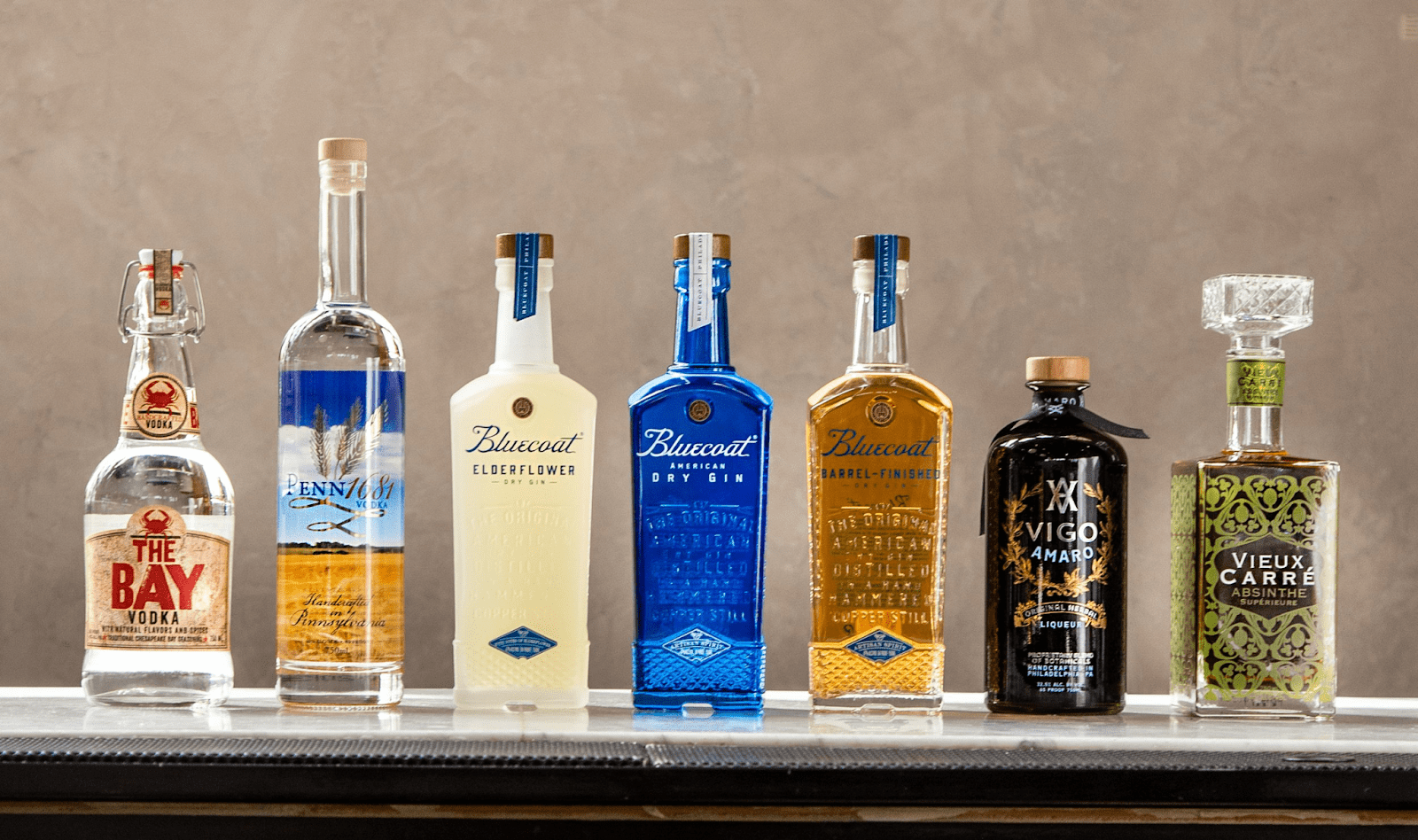
Currently, Philadelphia Distilling offers five primary brand categories:
- Bluecoat American Dry Gin: Produced since 2006, this gin boasts a vibrant flavor with prominent citrus notes. By 2011, it was sold in 37 U.S. states and later began international export.
- Penn 1681 Vodka: Launched in 2008, this vodka stands apart from traditional wheat or potato-based versions by using rye grown in Pennsylvania as its base.
- Vieux Carré Absinthe Supérieure: Added to the lineup in 2009, this absinthe was the first legal spirit of its kind on the East Coast in nearly a century.
- XXX Shine Whiskey: Introduced in 2011, this robust corn whiskey comes in its original version, as well as unique “Salted Caramel” and “LiberTea” (a blend of black tea, honey, and lemon) flavors.
- The Bay Vodka: Unveiled in 2013, this vodka offers a distinctive flavor profile.
Another intriguing item in the company’s range is Bartram’s Bitters, produced since 2012. This bitter faithfully recreates an ancient recipe found in the book of renowned botanist John Bartram’s family. It’s made using ash bark from trees in Bartram’s Garden in Philadelphia.
The company’s most acclaimed spirit is its Bluecoat Dry Gin. In 2007, it was awarded a gold medal and the “Best in Class” honor at the International Wine & Spirit Competition. In 2009, the gin was named best in show at the San Francisco World Spirits Competition.
Other Spirit Producers in Philadelphia
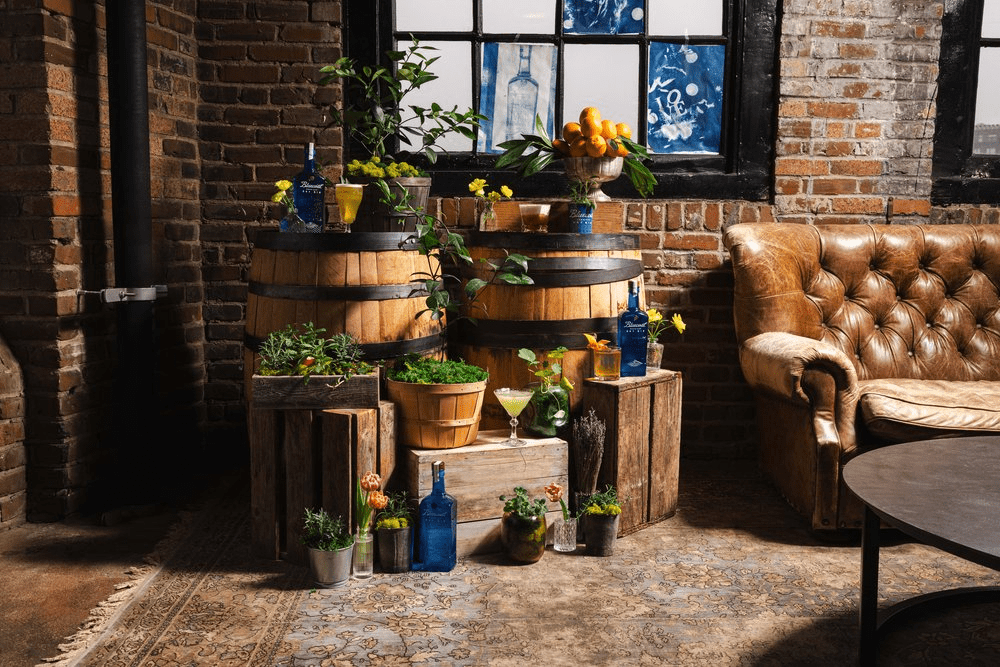
Nearly a century after the prohibition of alcohol production and sales, Philadelphia’s spirits scene is thriving. For instance, on Frankford Avenue, you’ll find “La Colombe,” a distillery, bakery, and café all in one. They produce unique rum, and you can even peek into the production process through their glass windows.
In the southern part of the city is “Pollyodd,” a company that crafts its own take on traditional Italian limoncello. Another well-known spirit producer is “Jacquin,” a long-standing business that successfully navigated the Prohibition years and continues to grow.
So, Philadelphia is certainly no newcomer to the liquor market, and its local products are gaining recognition both in the U.S. and internationally.