

Philadelphia’s iconic “The Bellevue-Stratford Hotel,” located at the corner of Broad and Walnut Streets, first opened its doors in 1904. Its visionary founder, George Boldt, aimed to create something truly extraordinary. The hotel didn’t just impress with its opulent luxury, eventually earning a spot as a National Historic Landmark; it also became the go-to venue for major events and a preferred retreat for the rich and famous. Learn more at philadelphia1.one.
The mid-20th century saw the hotel navigate numerous highs and lows, even enduring a temporary closure. Eventually, new owners took the reins, undertaking a massive renovation. Today, in the 21st century, the hotel continues to operate, standing as a testament to its enduring elegance and a beautiful landmark in the city.
The Bellevue-Stratford Hotel: The Genesis
George Boldt, a Prussian immigrant, arrived in the U.S. in the 1860s and settled in Philadelphia, where he married. The couple purchased and successfully managed a small hotel. In 1890, George was invited to manage the illustrious “Waldorf-Astoria” in New York. Armed with this invaluable experience and a firsthand taste of true luxury, he returned to Philadelphia with a grand vision: to build an equally magnificent hotel.
Boldt acquired a small building and commissioned local firm G. W. & W. D. Hewitt to design a 19-story French Renaissance-style hotel. Construction spanned two years and cost a staggering $8 million. When it opened in 1904, the hotel was described as the most luxurious in the United States. It featured hundreds of suites, marble staircases, a vast ballroom, stained-glass windows, and Venetian windows. Even the lighting was designed by Thomas Edison. By 1912, the number of guest rooms expanded to 1,090, and dome-shaped conference rooms were added to the top floor.
The hotel quite rapidly became the pulsating heart of Philadelphia’s business, cultural, and social life. It drew in influential and wealthy individuals, hosting lavish charity balls and elegant weddings. Royalty, heads of state, renowned politicians, actors, writers, and singers all made it their temporary home. From Theodore Roosevelt to Ronald Reagan – U.S. Presidents consistently chose this hotel for their stays.
In 1925, the Bellevue Company acquired the hotel from the original owner’s heirs for $6.5 million. From the 1920s through the 1940s, Claude Bennett served as the hotel’s manager.
Highs and Lows
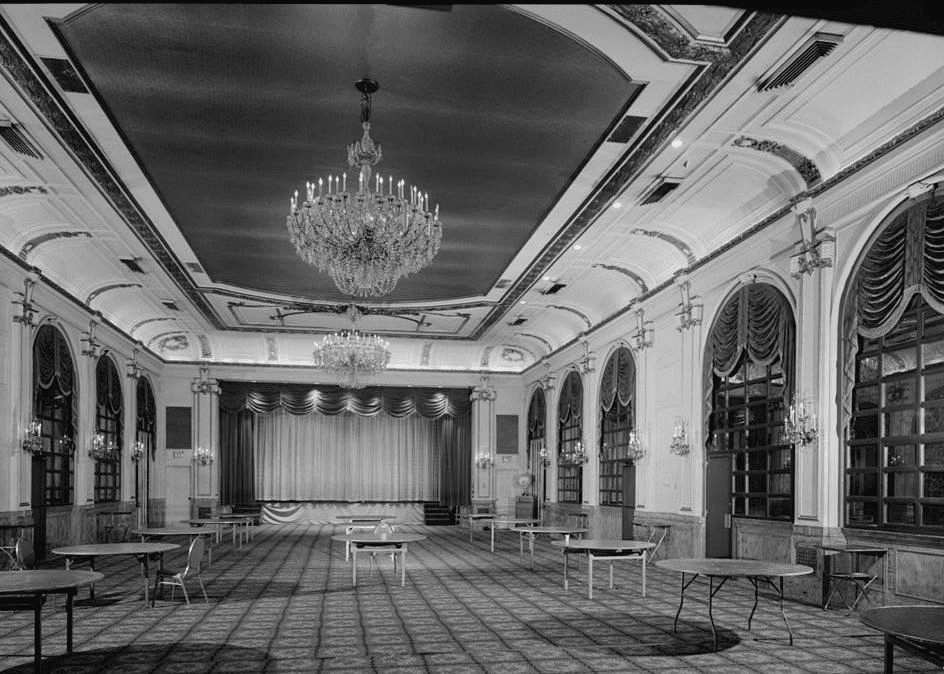
The first major challenge in the hotel’s history arrived with the Great Depression – the global economic crisis of the 1930s. During this period, the establishment’s luster dimmed, and both the number of guests and prestigious events dwindled. In the years that followed, the hotel’s rich, ornate architecture fell out of fashion, starting to be seen as an anachronism.
Charles Todd, the next manager, managed to somewhat restore its reputation. For instance, the hotel served as the headquarters for both the Republican and Democratic National Conventions in 1936 and 1948. In 1963, John F. Kennedy himself stayed there. It seemed as though the hotel’s fortunes were turning, and its reputation was largely revived.
However, a new and devastating blow struck in 1976. During a statewide American Legion convention, a pneumonia-like illness rapidly spread among the hotel’s guests. Nearly 200 people fell ill, and 29 tragically died. The mysterious “Legionnaires’ disease” was widely reported in the press, leading to a sharp decline in hotel occupancy. Ultimately, on November 18, 1976, the hotel closed its doors.
The pathogen behind the new disease was discovered the following year by Dr. Joseph McDade, and it was named Legionella. It turned out that warm, humid environments facilitated its multiplication, and in the hotel, it had spread through the air conditioning system. That same year, the hotel was added to the National Register of Historic Places, but it remained empty.
The Hotel’s Rebirth
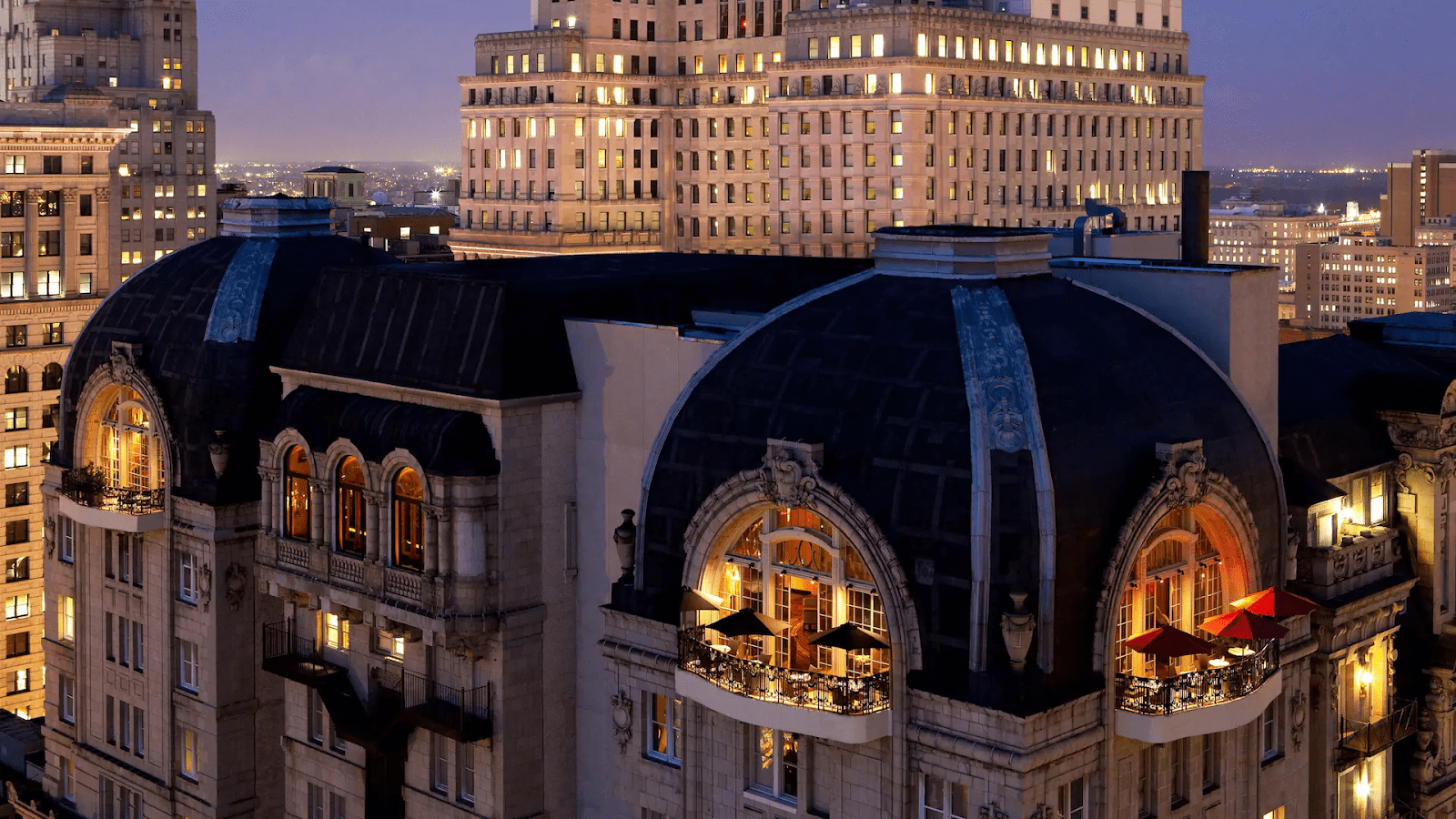
In 1978, the building was bought by the “Richard I. Rubin Company.” Decades earlier, Ronald Rubin’s father, Richard Rubin, a Ukrainian immigrant, had landed his first job in America delivering shoes at this very hotel. Driven by this personal connection, Ronald aimed to restore the landmark, initiating a massive $25 million renovation:
- All guest rooms were completely redesigned, and their number was reduced to 565.
- Common areas were meticulously restored using historical photographs from the hotel’s early days.
- Carpets were imported from Ireland, crystal chandeliers from Uruguay, and marble from Portugal.
The revitalized hotel reopened in 1979 as the “Fairmont Hotel.” The following year, “Western International Hotels” acquired it and reinstated its original name. However, demand for hotels in Philadelphia was low at the time. The establishment barely reached 55% occupancy, leading to losses and ultimately another closure in 1986.
After this, the Rubin company again reacquired a stake and embarked on a $100 million reconstruction. A significant portion of the hotel rooms were converted into office spaces, which opened in 1988. The hotel section proper resumed operations a year later.
In 1994, “Interstate Hotels & Resorts of Pittsburgh” took over management, followed by “Hyatt” two years later. When Ronald Rubin passed away in 2021, the building was sold to “Lubert-Adler Partners.” They converted the vacant offices into apartments, and today, the building remains a versatile structure, housing hotel rooms, offices, conference facilities, and restaurants.