

Stephen Girard passed away on December 26, 1831. At the time of his death, he was the wealthiest person in the United States, with an estate valued at $7.5 million—an astounding $255.9 million in 21st-century terms. He amassed his fortune as a highly successful merchant, banker, and investor. Without children or direct heirs, he bequeathed the majority of his property and wealth to Philadelphia. Throughout his life, he was also a renowned philanthropist, making significant contributions to improve the lives of the city’s residents. Learn more about his incredible life story at philadelphia1.one.
Stephen Girard’s Early Life and Move to the U.S.
Stephen was born on May 20, 1750, in France. His father was a ship captain. Stephen did not receive a formal education, and from the age of eight, he was nearly blind in his right eye. Following in his father’s footsteps, he signed on as a cabin boy in 1760, embarking on a voyage to distant America.
Stephen arrived in New York, where he began working among the port’s merchants:
- By 1773, he became a ship captain, and the very next year, he launched his own trading business.
- When the American Revolutionary War began in 1776, he sailed to Philadelphia for the first time.
- Girard decided he could avoid unwelcome encounters with Royal Navy warships there and eventually settled in the city.
- With the money he earned, he opened a liquor and grocery store.
His business ventures were quite successful. An interesting detail from this period is that Girard acquired a slave. A woman named Hannah was left to him by his brother during a visit in 1783. Despite the gradual abolition of slavery in Pennsylvania, Hannah remained Girard’s slave until his death. In 1828, she was reportedly the only enslaved person in the city.
Life in Philadelphia and His Own Bank
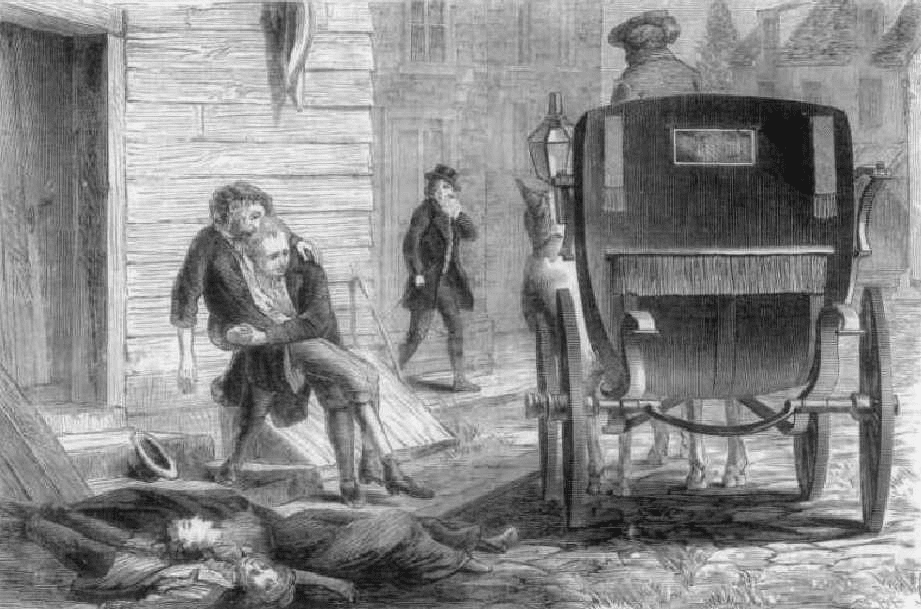
Stephen Girard became a resident of Pennsylvania in 1778 and remained in Philadelphia after his initial move. Even when the yellow fever epidemic struck in 1793, the businessman did not abandon the city. Unlike many other wealthy citizens, he stayed and actively participated in caring for the sick. He converted his country house into a hospital, sought volunteers, and provided aid to those in need. Girard did the same during the next epidemic in 1797. For these selfless acts, he earned the profound respect of the city’s inhabitants, who revered him as a true hero.
By 1790, Stephen Girard had amassed a capital of $6,000 and owned several merchant ships. The following year, his employees helped rescue property belonging to French planters after the Haitian Revolution. Goods valued at $10,000 were placed on his ships, but the owners were never found, so all the property transferred to Girard’s ownership. He also engaged in trade with China, which included not only legitimate goods but also smuggled opium. This business continued until 1824, ceasing after a misunderstanding with local authorities.
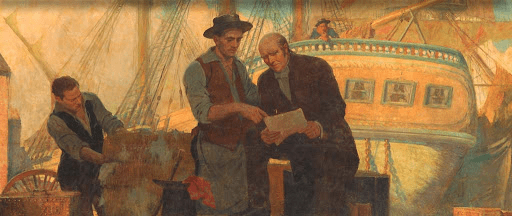
Beyond his maritime trade, Stephen Girard developed a keen interest in banking. When the charter of the First Bank of the United States expired in 1811, he purchased most of its shares, along with the building on South Third Street in Philadelphia. From then on, the bank became his property. Girard hired George Simpson, a former employee of the First Bank, as his cashier. Assembling the necessary team, he opened his own bank on May 18, 1812. Interestingly, to facilitate the closure of the old bank, he leased out unnecessary premises in the building to the former owners.
During that period, Pennsylvania laws prohibited associations from conducting banking activities without a charter, but no such prohibition existed for an individual. Stephen Girard skillfully exploited this loophole. Although other city banks were reluctant to accept his banknotes and demanded his registration, Girard managed to circumvent bureaucratic obstacles and successfully operate his business.
It was Girard’s bank that provided the U.S. government with a substantial loan of $1 million during the War of 1812. Towards the end of the war, when government finances were nearly depleted, he made most of his personal assets available to the government. This enabled the U.S. to continue the war, and after its conclusion, Stephen Girard became a shareholder and one of the directors of the Second Bank of the United States.
Girard’s bank officially closed after his death. However, Philadelphia businessmen shrewdly leveraged his reputation and opened the “Girard Trust Company.” This later evolved into “Girard Bank,” and in 1983, it merged with “Mellon Bank.” In the early 21st century, Citizens Bank acquired the financial institution. The monumental building still stands at Broad and Chestnut Streets in Philadelphia, where Stephen Girard once began his banking endeavors.
Personal Life
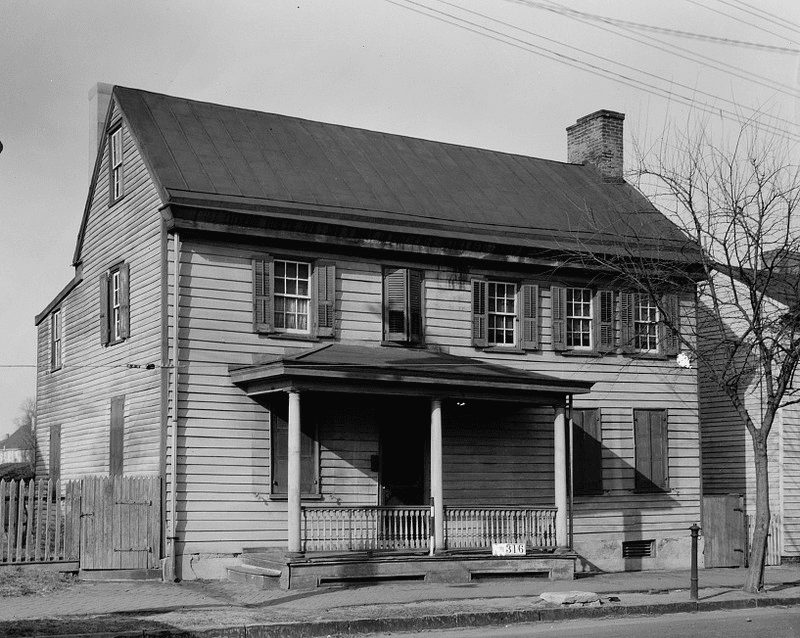
In 1776, Stephen met Mary Lum, a Philadelphian nine years his junior, whose father was a shipbuilder. They soon married, and Stephen purchased a house on Mill Street in New Jersey.
Initially, their married life was quite happy and untroubled. However, over time, Mary began to experience sudden and uncontrollable outbursts of rage. In 1785, Girard’s wife was diagnosed with a mental instability that was untreatable with the medical knowledge of the time. Stephen was devastated and at a loss for what to do.
Ultimately, in 1790, Girard’s wife was hospitalized at Pennsylvania Hospital as incurably insane. She was comfortably settled and even gave birth to a baby girl shortly after, though the father’s identity remains unknown. The child died within a few months, and Mary Girard remained institutionalized.
As for Stephen Girard, in 1787, he met Sally Bickham, who became his mistress. He never pursued a divorce and gave up on his dream of starting his own family. He never had children.
Death and Legacy
In late 1830, Stephen Girard was involved in an unfortunate accident on the street near Second and Market Streets. He was crossing the street when he was struck by a horse-drawn cart. The wheels ran over the left side of his face, damaging his eye, ear, and cheek. Girard was 80 years old at the time, but he managed to get up on his own and walk to a doctor, who cleaned and bandaged his wounds.
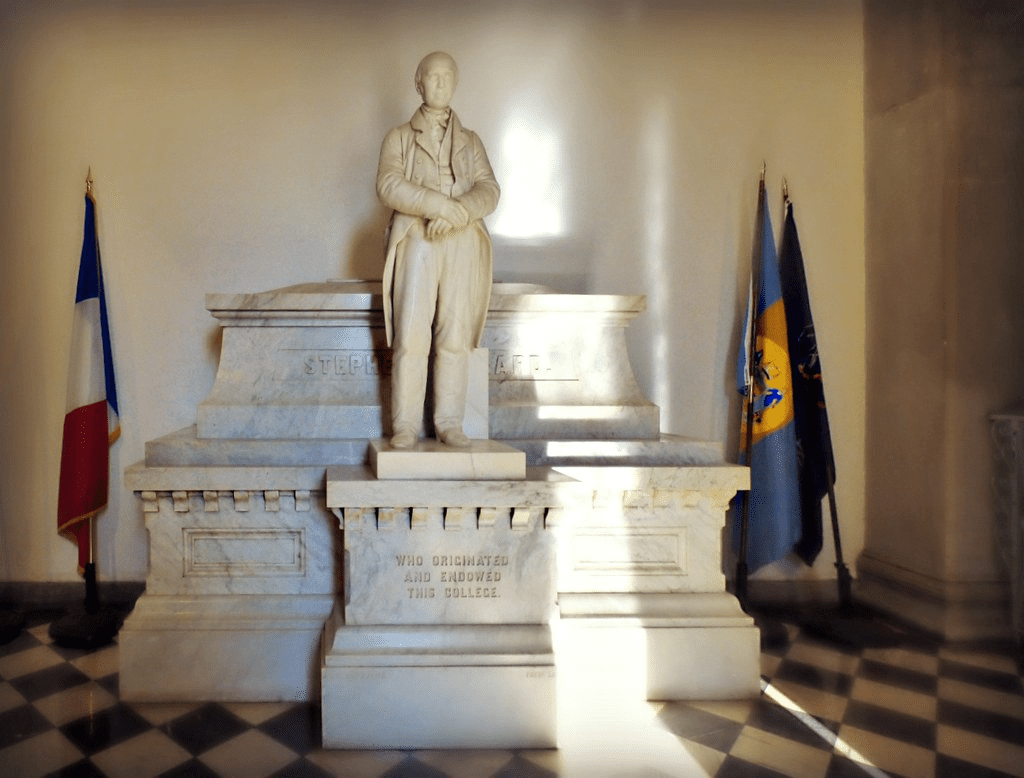
Soon after, he returned to his business affairs, but he was never destined to fully recover. A year after the incident, he passed away and was buried in Holy Trinity Churchyard. Two decades later, he was reinterred in the vestibule of the Founders Hall at Girard College.
At the time of his death, Stephen Girard was the wealthiest person in the U.S., with an estate estimated at $7.5 million. However, he had no descendants or direct heirs who could receive any portion of these funds.
Known as a philanthropist during his lifetime, Girard bequeathed the majority of his fortune to charitable and municipal institutions in Philadelphia and New Orleans. Among his wishes was the establishment of a boarding school for poor children and orphans. Thus, Girard College was opened in the city in 1848.
The businessman also left $10,000 to the city’s public schools, and the income from his investments was to be used to purchase books for school libraries. Furthermore, his will included the establishment of special funds for talented students.
Throughout his life, Stephen Girard was a highly active individual who was never idle and had no tolerance for laziness in others. He achieved a great deal and left a lasting legacy in the history of Philadelphia.