

To reach great heights, one must work hard, but not every worker can become an influential figure. James Howard Marshall II, who came from a poor family with no support behind him, showed that it is possible to gain worldwide recognition and status as one of the wealthiest people in the world. The key is to do what you love and follow that path. Learn more at philadelphia1.one.
Early years of Marshall II
On a winter day, January 24, 1905, a little boy was born. No one could have ever imagined that such a child would conquer the world. However, his path was not easy and required a lot of effort.
James Howard Marshall II was born in Philadelphia, in the historically rich neighborhood of Germantown. He grew up in a modest Quaker family. Although his family was not rich, he was given the opportunity to study and gain knowledge at prestigious educational institutions. He proved himself to be a diligent and hardworking student.
His first educational institution was George School, and then, James transferred to a private high school in Newtown, Pennsylvania. Of course, it was not easy for him to be far from his family, but the boy knew that if he did not secure his future, no one else would do it for him. After successfully completing high school, Marshall enrolled at Haverford College, where he began studying the humanities. He graduated from his last educational institution in 1926.
Starting to work from school years
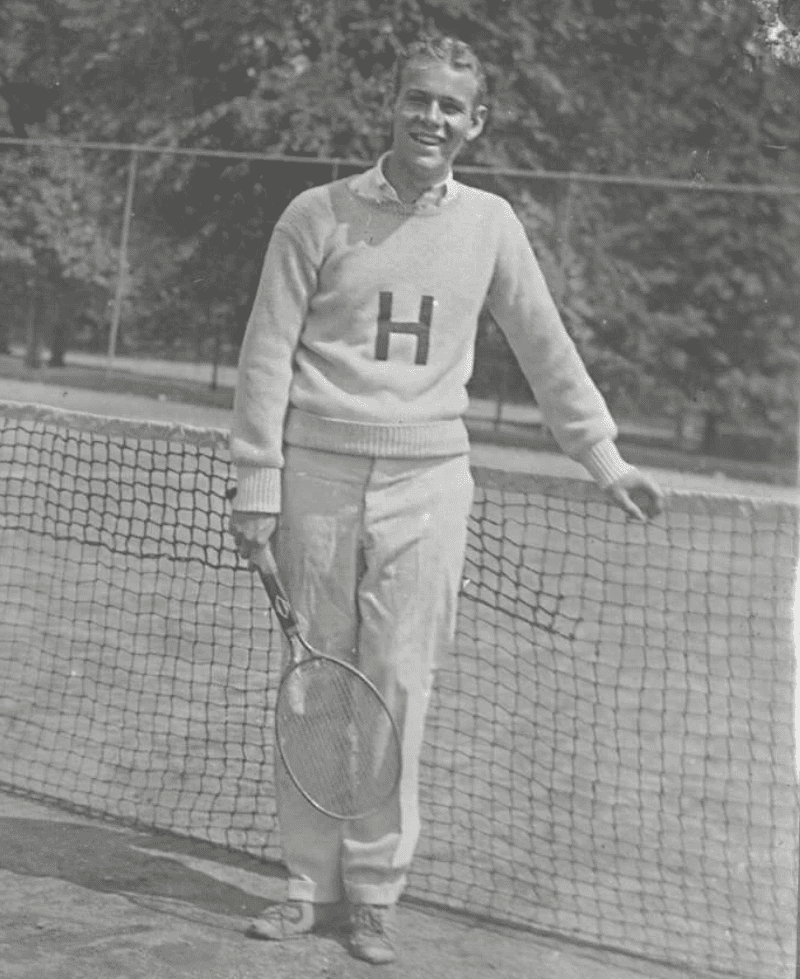
While studying at George School and Haverford, Marshall found his calling. He began editing the school newspapers that everyone read. Even then, the young man understood that he could not make any errors in his work. Despite his workload in the editorial office, James found time for other activities. He was the captain of the debate teams, played football and also participated in tennis competitions under the top-rated amateur player Bill Tilden.
After school, Marshall entered the prestigious Yale University. He chose to study law, which would be quite useful for him in the future. In 1931, he graduated from the university with honors.
While studying at Yale, he was an editor again, this time in the law journal. James also studied under the pioneer of law and economics, Walton Hale Hamilton. He picked up every piece of information that his mentor gave to him, knowing that it could be useful someday, especially since the field was gaining popularity.
First steps in building a career
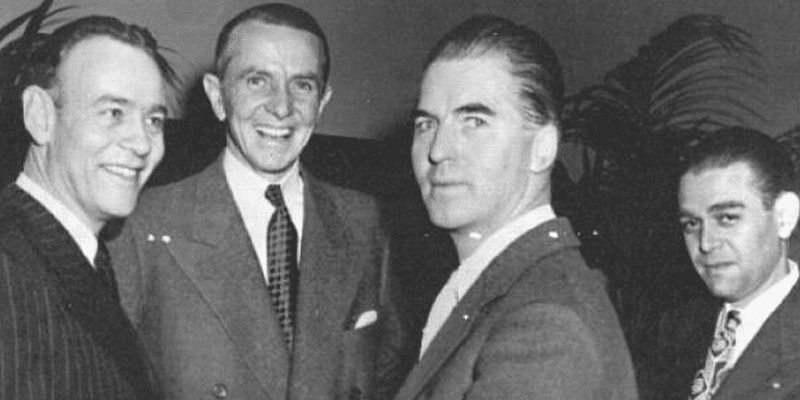
After graduating from Yale University, the young man began working there as an assistant dean at the law school. He held this position from 1931 to 1933. At the same time, he held courses in business, finance and procedures. As a member of the school of legal realism, James also published his articles.
His work at the university became not only interesting but also beneficial. He had the opportunity to meet and work with future Supreme Court Justice W. O. Douglas. They became colleagues while writing the article “A Factual Study of Bankruptcy Administration and Some Suggestions,” which was published in 1932. Prior to this, he had written another paper, but with Norman Meyers, which was released a year before the first, in 1931, and titled “Legal Planning of Petroleum Production.” The man was interested in oil from his youth.
The research in the article “Legal Planning of Petroleum Production” proposed an alternative to the then practice of controlled production in the oil industry, which led to significant fluctuations between economic upturn and depression. The article by the two colleagues greatly intrigued the government because there were many supporters of the New Deal in society at that time who also favored legal realism.
A new boost in his career

In 1933, Marshall decided to leave the university. He received an interesting offer that he could not refuse. James got a job as an assistant attorney in the Department of the Interior under Harold L. Ickes.
In his new position, he not only learned something new but also tried to implement things. In 1933, Marshall created the Code of Fair Competition for the Petroleum Industry. Later, in 1935, he wrote the Connally Hot Oil Act. The man did not waste any time at work, and his efforts were noticed. His law was passed after the Supreme Court overturned the National Industrial Recovery Act.
Marshall’s next step was to restore legislation regulating the flow of oil between states. In doing so, he aimed to protect the industry from smuggled oil and attempt to stabilize the fall in prices. Initially, his chief, Ickes, thought about setting minimum prices for the mineral by the government. However, Marshall was not one to settle for handouts. He compelled Ickes to sign a plan that required certificates for legally extracted oil transported in interstate trade.
Marshall’s tenure as an assistant attorney lasted not long, until 1935. He became interested in a vacancy of special counsel to K. R. Kingsbury, the president of Standard Oil (now known as Chevron Corporation) in California, San Francisco. In 1937, he changed his job and position again, becoming a partner at the law firm Pillsbury Madison Sutro (now known as Pillsbury Winthrop Shaw Pittman).
World War II and aftermath

1941 was a terrible period for everyone, and Marshall was no exception. However, despite the difficult times, he tried to help his country. He went to Washington and joined the Petroleum Administration for War as a legal advisor. He was responsible for developing U.S. energy policy during the war, including the Coal Pipeline Act. He then became a member of the Committee on Reparations and the American Petroleum Institute.
Post-war years were quite successful for Marshall’s career. He moved to Ashland, Kentucky, in 1944, where he served as vice president and president of Ashland Oil and Refining Co. (today known as Ashland Inc.). In 1946, he devised a project to establish the National Petroleum Council. In 1952, he was appointed as executive vice president at Signal Oil & Gas.
In the same year, 1952, Marshall became a co-founder of the Great Northern Oil company. In 1955, this company built an oil refinery in Rosemount, Minnesota. The importance of this enterprise lay in its ability to process heavy and acid-saturated Canadian crude oil. He founded one of the most famous companies, Marshall Petroleum, in 1984. His business eventually made him one of the richest individuals in the world.
Death and the battle for inheritance
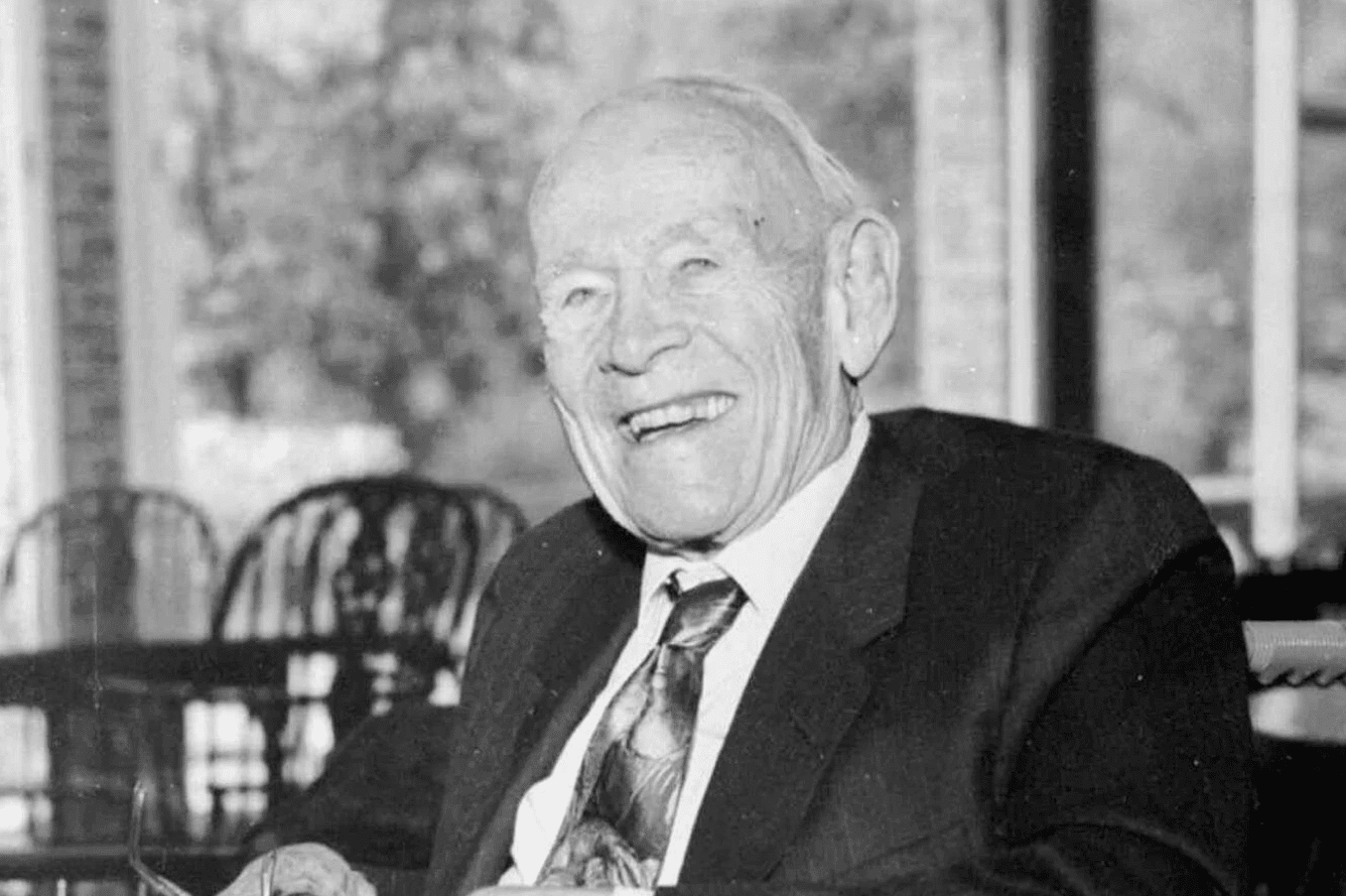
On August 4, 1995, J. Howard Marshall II passed away at the age of 90 from pneumonia. Following his death, Anna Nicole Smith, who had been married to him for only 14 months, started a legal battle with her former stepson, Pierce Marshall.
It turned out that the will and trust did not include his last wife and James Howard III, his second son. That is why former relatives attempted to appeal and revoke the inheritance decision. However, in 2001, they did not succeed and lost the case on all counts.
Haverford College also filed a lawsuit against Marshall’s estate after his death. It was revealed that James had promised to donate $4 million to his alma mater in 1976 but only managed to send $2 million. In 2003, the college also lost the case, as the jury found that Haverford did not suffer from the lack of funds.