

James Logan served as Philadelphia’s mayor, chief justice of the Pennsylvania Supreme Court and lieutenant governor. In addition to his busy administrative activities, he ran his own business, enjoyed collecting books and conducted scientific research. He also helped establish a college in Philadelphia, which subsequently became the University of Pennsylvania. Find out more at philadelphia1.one.
Logan was born in Ireland and later relocated to Philadelphia at the invitation of William Penn. We will tell you more about this remarkable individual.
Early years
James was born on October 20, 1674, in what is today Northern Ireland. His father, Patrick Logan, graduated from the University of Edinburgh with a Master of Arts degree. At some point, he converted from Anglican clergy to Quaker beliefs, which influenced the fate of the entire family.
James learned linen draping, as well as obtained a classical and mathematical education. Due to the war, which began in 1689, the family relocated to Edinburgh, then to London and Bristol. There, in 1693, James started teaching. However, he did not stay long in this area. Logan was eager to pursue his dreams and discovered such an opportunity in distant America. In 1699, the young man went to Pennsylvania to work as William Penn’s secretary.
Administrative career in Pennsylvania
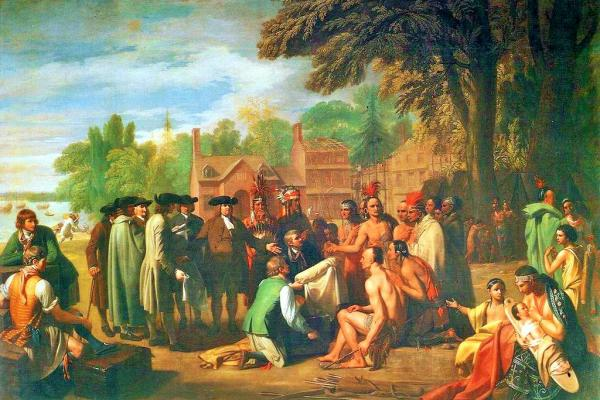
William Penn became the founder of Pennsylvania and Philadelphia and contributed significantly to the region’s development, although he only lived here for a few years. Penn was obliged to go back to England. However, many of those who joined him in the New World stayed and were able to fulfill their dreams. One of these individuals was James Logan.
In the developing colony, James became a fairly affluent landowner and began his political career almost immediately. In 1701, he served as a clerk and property commissioner before joining the provincial council two years later.
In the future, his career developed as follows:
- in 1722, Logan was elected mayor of Philadelphia
- from 1731 to 1739, he was chief justice of the state
- from 1736 to 1738, James served as acting governor.
As mayor of Philadelphia, Logan enabled Catholic immigrants from Ireland to attend public mass. He was opposed to Quaker pacifism and advocated military taxes.
While serving as governor, Logan played an important role in expanding the colony. William Penn was well-known for his friendly relationship with the local Lenape Indian tribe and his commitment to peaceful negotiations. Logan also pushed land acquisition policies, but he was not always honest with the Indians.
He signed an agreement known as the Walking Purchase. The tribe left the territory in northeastern Pennsylvania and western present-day New Jersey, which it purportedly had agreed to sell to William Penn back in 1686. Some historians, however, argue that the document was fake.
According to the terms, the Lenape were required to provide as much land as a person passes in a day and a half. However, the agreement’s phrasing was fairly imprecise. The Lenape sought help from the Iroquois tribe, but they decided not to intervene, partly due to Logan’s influence. As a result, the colony expanded by over 1,200,000 acres, and the Lenape migrated to adjacent territories, ending diplomatic relations with Pennsylvania.
Business, research and other hobbies
In addition to politics, James Logan was heavily involved in the trade, particularly furs. This allowed him to become one of the wealthiest people in America at the time. He also ran land operations.
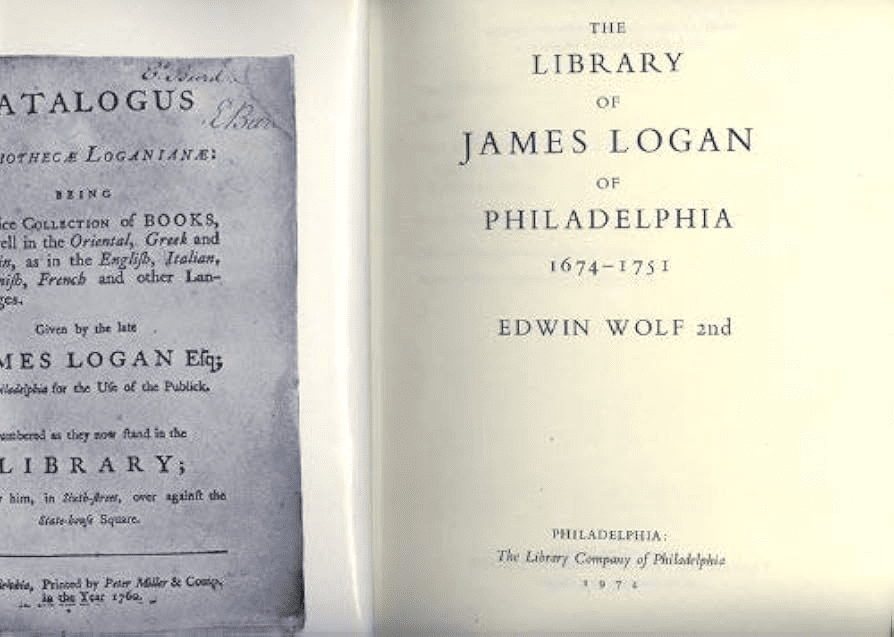
Logan’s true passion was literature. During his lifetime, he became known as a bibliophile, having amassed a library of over 3,000 volumes. At the time, it was most likely America’s largest and greatest collection of classical works. James reread them all, personally translated Cicero and was continuously adding to his book collection. Even Benjamin Franklin, who communicated with Logan personally, was aware of his collection.
The majority of the books in the library were from Northern Europe and Britain, dating back to the seventeenth century. Additionally, there were both earlier and later works. Among them were volumes on history, geography, religion, physics, mathematics, literature, philosophy, medicine and even tourism. Logan saved translations of Archimedes’ 1615 works, medieval mathematical treatises and numerous other unique publications. His agent worked in London, looking for vintage publications, purchasing them and shipping them to America.
James passed away on October 31, 1751, in Philadelphia. He was 77 years old. He was buried at a local cemetery. As stated in Logan’s will, his library was donated to the Library Company of Philadelphia after his passing. In this way, he not only enriched his own life but also passed on valuable knowledge in the form of books to future generations.