

It is well known that women were not allowed to receive an education for a long period. Only men could enjoy such privileges. But even when girls were admitted to the mysterious realm of learning, they could not access the full spectrum of knowledge. This article describes the entire journey that women had to go through to get access to education. Learn more at philadelphia1.one.
The first educational institutions for women
The development of education for women began long before the American Revolution, which provided an opportunity to gain some knowledge and grow. However, all these institutions were not recognized by the government. They were known only within a small circle.
The first official academy appeared in Philadelphia in 1787, thanks to John Poore. The institution became a private women’s academy just five years later and was recognized as the first of its kind in all of America. The school later gained fame because Benjamin Rush delivered a speech about women’s education there. This academy educated all young women who were interested in it, regardless of where they came from.
Although all women could enter this academy, not all of them had the money necessary to afford tuition. So Anne Parrish, a Quaker philanthropist, founded a school. She helped every woman get an education, no matter what their background was. The school received support from various sponsors. It became famous due to the fact that it was organized and financed exclusively by women who wanted to ensure that every girl received proper knowledge and respect.
It is no secret that most women were educated to later become good wives or teachers. Every girl was expected to marry and take on the responsibilities of a homemaker. It did not require a great deal of knowledge. However, at the Academy of Noble Girls, a more extensive education was implemented, which included literature, public administration, natural philosophy and natural sciences. At the same time, men were limited to studying only classical subjects.
Development of education
For a while, there were enough schools for women who wanted to receive a general and formal education. However, over time, institutions began to open that could provide more professional education. Moreover, they were accessible even to less affluent individuals. One such institution was Philadelphia School of Design, founded in 1848. It later expanded and became Moore Institute of Art, Science and Industry (now known as Moore College of Art & Design).
Already in the 19th century, women could study art and design. This field of activity intertwined with commercial and entertainment sectors, where women had the freedom to fully express themselves and create without interruption. Art and design education became quite popular, which helped to increase the number of people who were part of the middle class.
The increasing number of people involved in this activity led to a huge demand for their products. The growth of consumers resulted in a higher demand for workers, which, in turn, led to the establishment of more vocational schools where women could learn art.
The demand for education was rapidly growing. In addition to the study of arts, pedagogical disciplines began to appear. There, girls could apply and later educate others. Following this, Philadelphia witnessed the establishment of a new medical college for women. This was the first institution of its kind in all of America, which later became the Woman’s Medical College of Pennsylvania.
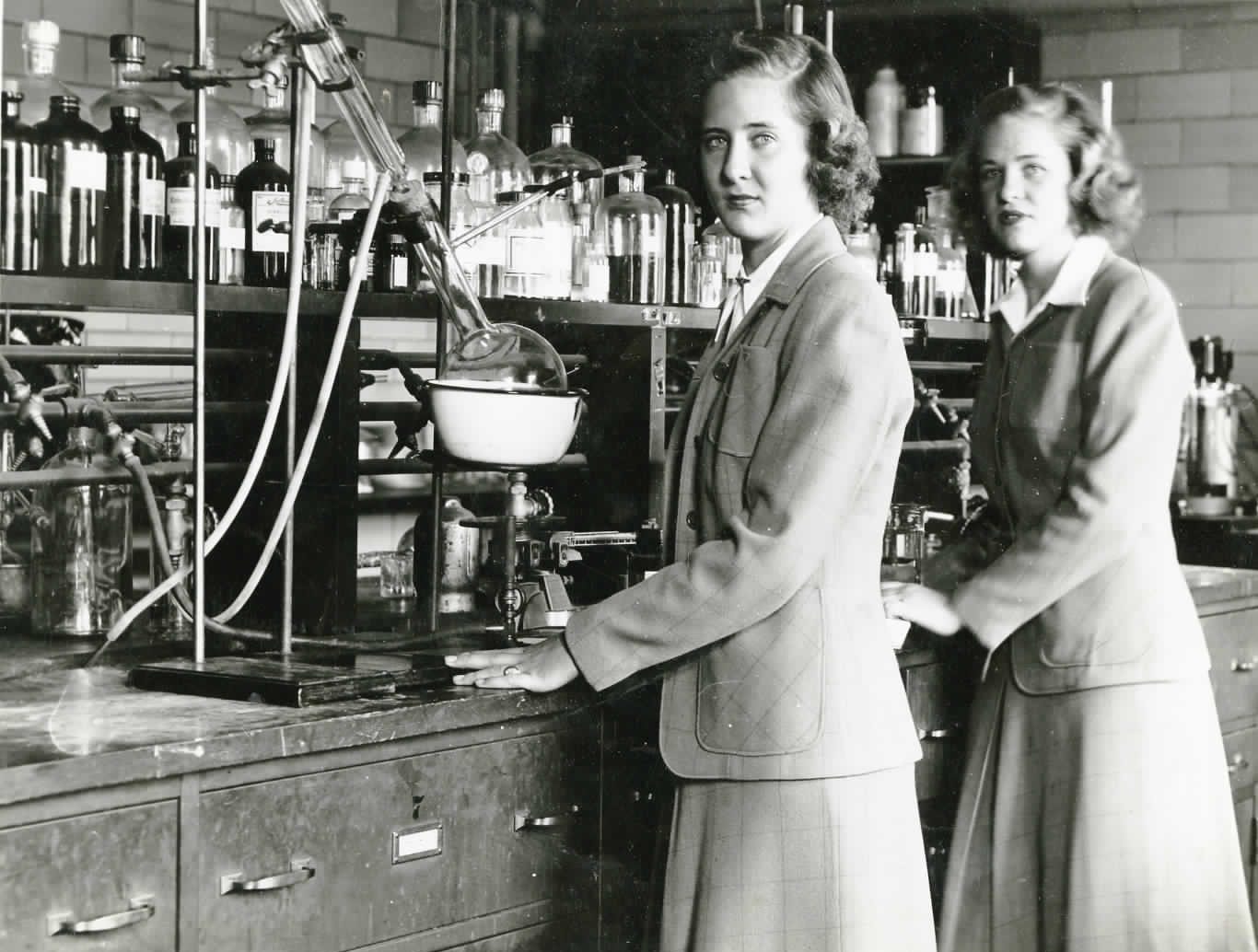
Girls had a knack for exact sciences, as they received basic knowledge in chemistry while still at the academy. Some people believed that women can be good at science work. Men, on the other hand, were of the opinion that girls were better suited to be homemakers and could only work as teachers for a short period and exclusively until marriage.
The first admissions to university and empowerment
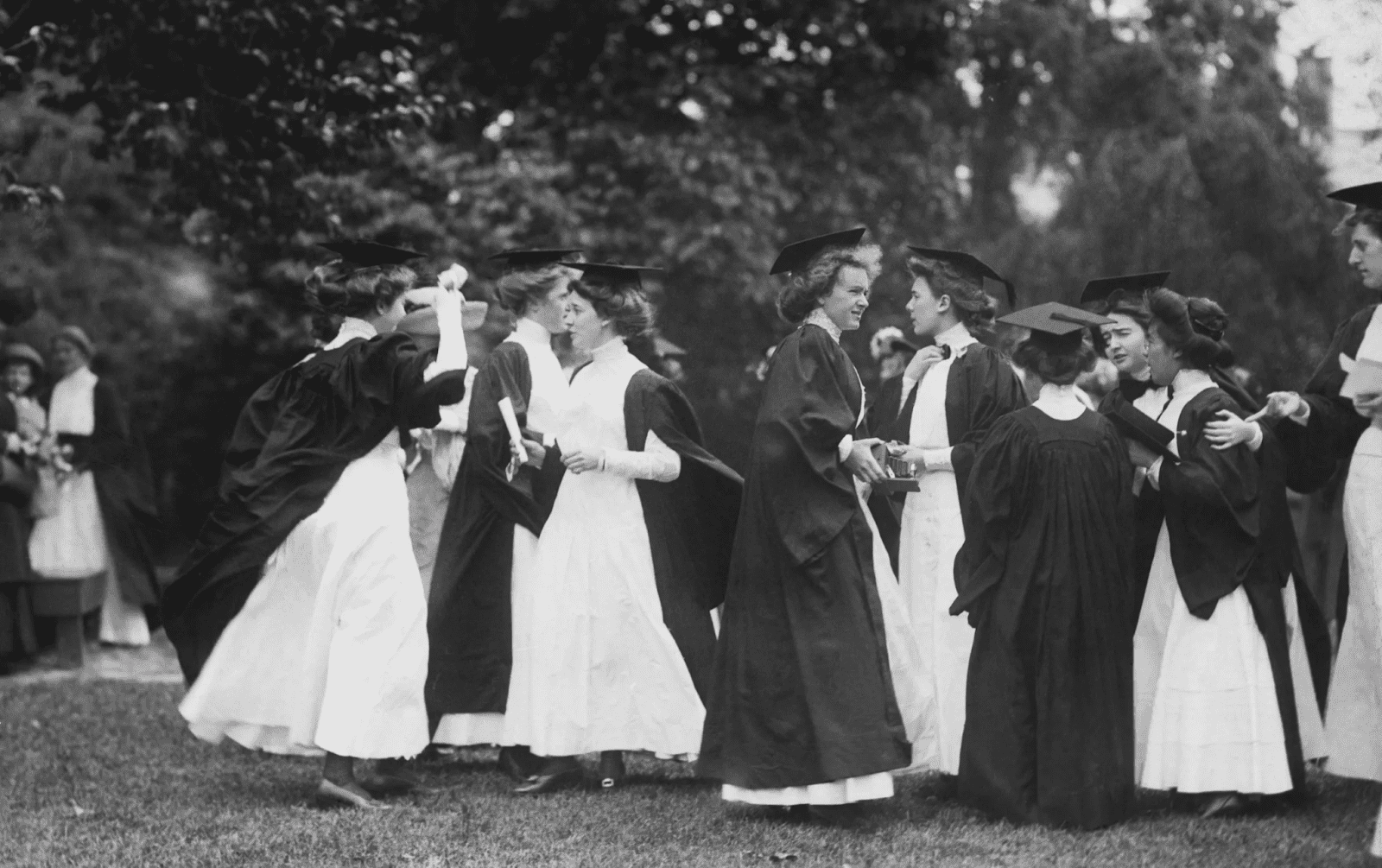
The times of the Civil War became a chance for women to become active participants in various movements. Activists were girls of all races and ages. They volunteered in different charitable societies directly related to the war.
After the war was over, every self-respecting woman took an active part in Freedmen’s Schools in the South. The work revealed their capacity for reform actions. Thanks to their perseverance, a woman first stepped through the doors of the University of Pennsylvania before 1880. But this event caused certain inequalities in admissions between boys and girls, which lasted until the 1950s.
As educational opportunities for women expanded, new high schools for upper-class girls began to open in Philadelphia. The Catholic Church also joined in active education, opening a number of schools.
The number of girls pursuing an education was steadily increasing, leading to discussions about the integration of boys and girls in the same schools. However, in 1873, there were those who opposed coeducation. One of them was Dr. Edward Clarke, who even wrote and published a treatise that became quite famous. Nevertheless, by the end of the 19th century, boys and girls studied together in elementary schools. The main reasons were economic and logistical challenges. By the 20th century, secondary schools were generally integrated. Separate institutions for girls and boys still existed, but they were mostly elite and private.
The struggle continues
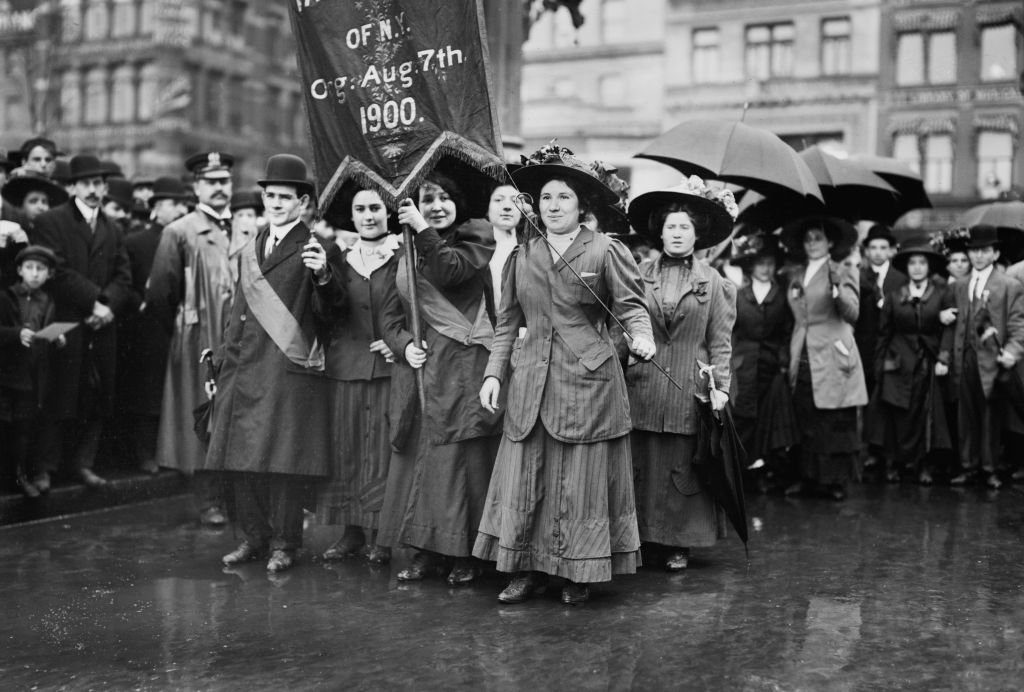
Women began to fight for their rights in education as early as the 19th century. In the 21st century, a girl is able to fulfill herself in every profession. It is important to note that they do this at the same level as men and sometimes even better. Despite this, the path to official permission for education and self-realization was quite difficult. Thanks to our ancestors, every woman can build her career in any field rather than remaining a servant to her husband, who expects a delicious dinner, a clean house and a dozen children. Nevertheless, women face sexism even today and quite often. But there is a modern generation fighting against this. They make every effort to ensure that the memory of women’s pain is never forgotten and appreciated.