

The Lutheran Theological Seminary at Philadelphia (LTSP) was one of the very first institutions of its kind in the U.S. and the largest in North America. Established in 1864, it has since operated, educating students from diverse Christian traditions. Discover more at philadelphia1.one.
In the 21st century, LTSP’s enrollment reached 275 students, supported by a faculty of 17 professors. In July 2017, it merged with a similar institution in Gettysburg, forming the United Lutheran Seminary. Let’s dive deeper into the history of this significant religious educational establishment.
From Schism to Unity
The history of LTSP is closely tied to the founding of the Ministerium of Pennsylvania in 1748, which marked the establishment of the first official Lutheran church in North America. Educational institutions soon followed, with the Lutheran Theological Seminary at Gettysburg, founded in 1826, leading the way.
However, over time, some adherents of the Lutheran faith began to express concerns that the Gettysburg institution was becoming too influenced by American culture, straying from orthodox Lutheran beliefs. For this reason, in 1864, the Ministerium of Pennsylvania withdrew from the Evangelical Lutheran General Synod of the United States and spearheaded the establishment of a new Lutheran Theological Seminary in Philadelphia.
In 1867, the General Council of the Evangelical Lutheran Church in North America was formed. For a period, these two Lutheran schools operated in parallel, and to some extent, competed with each other. Ultimately, in 2017, they merged to create the United Lutheran Seminary, finally resolving their longstanding conflict.
The Evolution of the Lutheran Theological Seminary at Philadelphia
The Lutheran Theological Seminary at Philadelphia began its operations in downtown Philadelphia, near Franklin Square. In 1889, it relocated to the Mount Airy suburb. That same year, the seminary’s first building, which is now known as the “Old Dorm,” was constructed.
In 1913, a Graduate School was opened at the seminary. By 1938, the institution received accreditation from the American Association of Theological Schools. Since 1980, the Urban Theological Institute has offered a weekend program for church leaders.
In 2020, the Reverend Dr. R. Guy Erwin became the seminary’s president. Students at the seminary can pursue various Master’s degrees, as well as a Ph.D. The seminary takes great pride in its alumni, among whom are many leaders of national and regional Lutheran and non-Lutheran churches. This includes former Presiding Bishops George Anderson and Frank Griswold.
The faculty is also highly professional and renowned. The heads of four other Lutheran theological seminaries in the U.S. previously served at LTSP. Notably, Lutheran church theologian Theodore Emanuel Schmauk chaired its Board of Directors from 1908 to 1920.
The Seminary Campus
The Philadelphia campus of the seminary spans 14 acres in the Mount Airy neighborhood, where the institution moved 30 years after its founding. This site was previously the estate of William Allen. Several notable areas of the campus are worth exploring.
Krauth Memorial Library
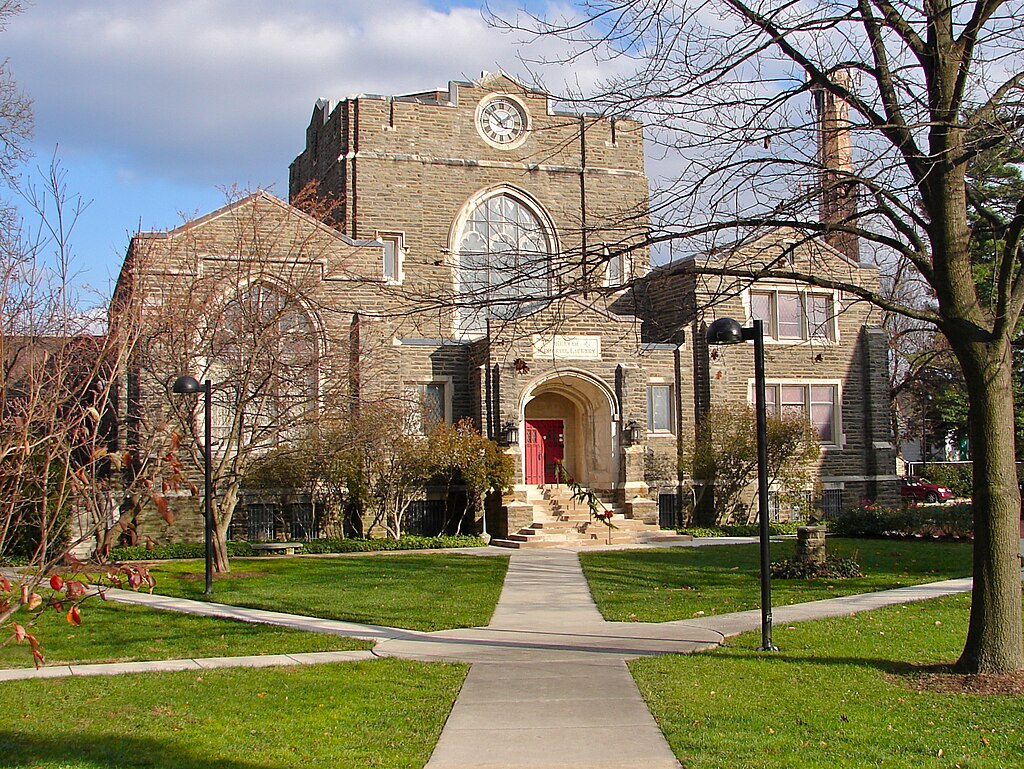
This library was named in honor of the renowned theologian and educator Charles Krauth. It houses 198,000 volumes, including manuscripts dating back to the 16th and 18th centuries, as well as works by Henry Melchior Muhlenberg, often called the “Patriarch of American Lutheranism.”
In 2008, the library celebrated its 100th anniversary. Beyond its invaluable collection of books and manuscripts, it stands as a true architectural gem, both inside and out.
Schaeffer-Ashmead Chapel and William Allen Plaza
Another valuable architectural and religious landmark on campus is the Schaeffer-Ashmead Chapel. It was renovated in 2004 and has since served as a place of worship.
The chapel is located adjacent to William Allen Plaza. The plaza features a peace pole and a statue of Henry Muhlenberg from 1917. Philadelphia transferred the statue to the seminary during World War I due to anti-German sentiment (it had previously stood in Fairmount Park). Each fall semester, freshmen have a tradition of decorating this statue.
Brossman Center
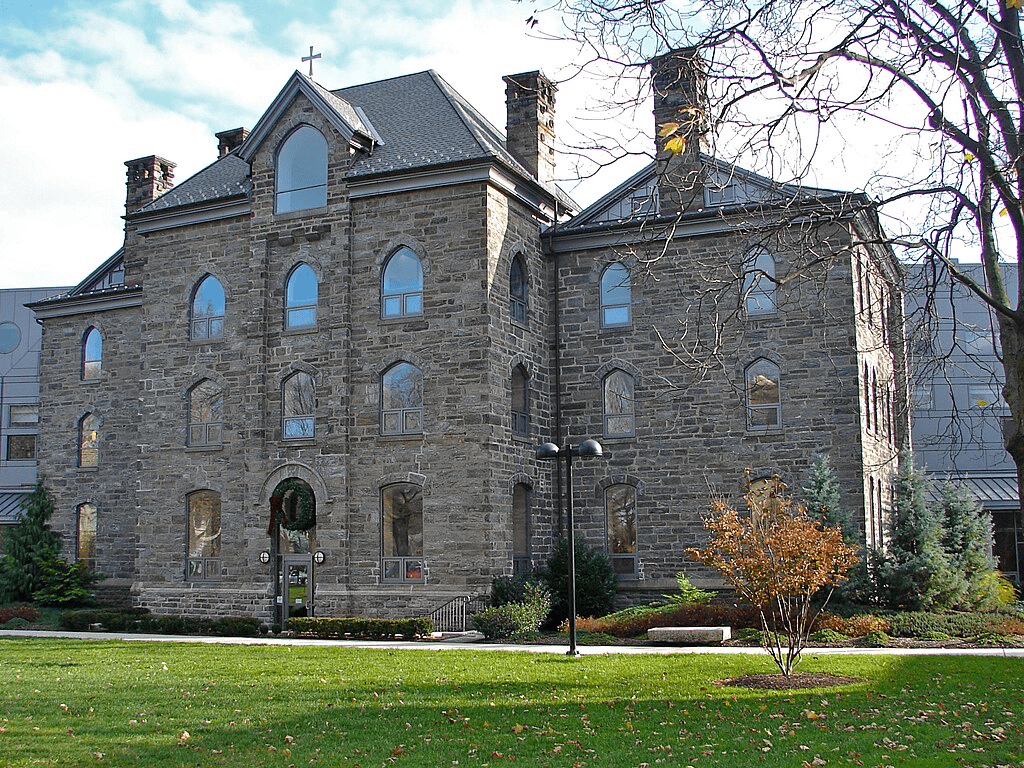
Opened in 2005, this center houses classrooms, faculty and administrative offices, and meeting rooms. The “Benbow Hall” space is utilized for various gatherings and lectures.
The Brossman Center also hosts the Northeastern Pennsylvania Regional Archives of the Evangelical Lutheran Church in America. Additionally, a dedicated vault for particularly valuable materials from the Krauth Memorial Library collection was established here.
Widmann Hall
This hall provides student residential facilities and houses the administrative offices for the Southeastern Pennsylvania Synod. Furthermore, other apartment-style student housing units are available on the northern part of the campus.
Today, the Lutheran Theological Seminary at Philadelphia continues to operate as part of the unified institution. It cherishes and preserves its traditions. At the same time, the merger has helped consolidate religious life and marked a significant stage in the development of Christian education.