

Some believe that it is impossible to get too many accolades or knowledge throughout one’s life. However, the example of David Rittenhouse shows how wrong those people are. During his lifetime, he mastered many different scientific fields. As a result, he became an astronomer, inventor, watchmaker, mathematician, surveyor, scientific instrument master and statesman. All these achievements he made in the 18th century when nobody heard about the internet. In modern times, any information can be quickly found as it is stored in the open access. However, this article is not about the problems of the 21st century but about the achievements of the 18th century. Read more at philadelphia1.one.
The first scientific knowledge and interests
The future scientist was born on April 8, 1732, in Germantown, Philadelphia, Pennsylvania. The boy had the right to call himself an American thanks to his great-grandfather. The latter was a native of Germany who chose to live in another country in 1688 and emigrated to Pennsylvania.
David himself began to take an interest in science quite early. This happened after the death of his uncle, who bequeathed the boy carpentry tools along with books. Due to his curiosity, he began to demonstrate a towering intelligence, which later led him into the world of science and invention.
The boy was already creating various things at a young age, such as a model of a paper factory that once belonged to his great-grandfather. David even managed to build a water wheel, but what was even more incredible than the work he did was the functionality of his invention. The young man did all this without studying in school. He taught himself using the family books, which he read non-stop. In addition, he was always curious about something new. David exhibited remarkable abilities in mathematics and natural sciences. At the age of just 13, he was able to understand Newton’s laws of motion and gravity. Not every adult can grasp it, let alone a child who did not attend educational institutions and learned all the material on his own.
Further development
Considering his early achievements in the field of invention, Rittenhouse did not stop there. He knew that he had countless ideas in his head and had a knack for realizing them. So at the age of 17, he took on a new project, a wooden clock. He successfully designed and then constructed it.
At the age of 19, he took on great responsibility and opened a workshop for scientific instruments. David chose his father’s farm as the location for developing his business. In the 21st century, a medical center and hospital occupy that site.
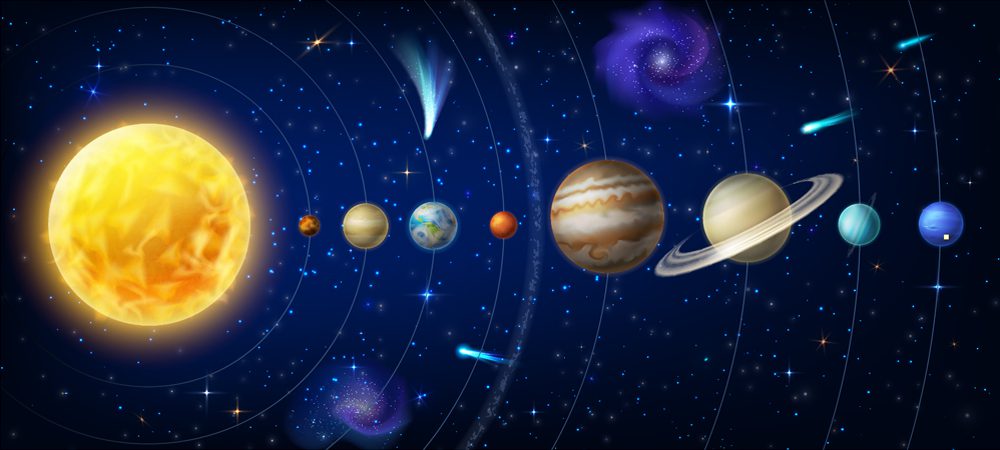
Thanks to his skills, the scientist managed to open a second workshop, where he could create massive models of the Solar System for the modern universities of Princeton and Pennsylvania. Each of his works for these institutions still exists today and is preserved in its original educational places.
Astronomy
In 1769, Rittenhouse had the honor of studying the trajectory of Venus, which was the subject of research at that time. One of the main reasons he was chosen for this important task was because he had his own observatory on his family farm, which was undoubtedly essential for such a mission. No less important was his membership in the American Astronomical Society, which made David an important link and specialist in this field. The project he was involved in was not the only one in his life. The man worked in numerous clubs and committees that dealt specifically with astronomical issues, in which he was an expert.
However, the man was known not only for his golden hands and astronomical knowledge. In 1768, he was invited to become a member of the American Philosophical Society. This proves that Rittenhouse was not only good at the exact sciences but also in the humanities, which made him a specialist in various fields. After the death of Benjamin Franklin, David even became vice president of that same society in 1790. Six years later, he headed it.
The man adored joining different societies. Besides those already mentioned, he also became a part of the American Academy of Arts and Sciences. Rittenhouse was even interested in London societies and, of course, joined one of them. This is an interesting fact because Americans rarely became members of British unions.
From the scientist’s interests, it can be noted that he liked to gather with his acquaintances. Therefore, in 1786, David built a new house designed in the Gregorian style. On its premises, Rittenhouse hosted meetings every Wednesday, which were attended by quite famous figures, such as Benjamin Franklin, Francis Hopkinson, Pierre Eugène and others. It is safe to say that the scientist was a socialite.
A significant contribution to history
One might think that Rittenhouse spent his free time with his friends and did nothing else. But this was not the case, as he worked as a surveyor in Great Britain at the start of his career. Later, the scientist continued the project in Pennsylvania. It was on his native land that David would conduct his research on the border between Delaware and Pennsylvania.
The man began another work over time. He established the borders of other states. His previous project had been executed so well that all the data was included in the Mason and Dixon surveys.
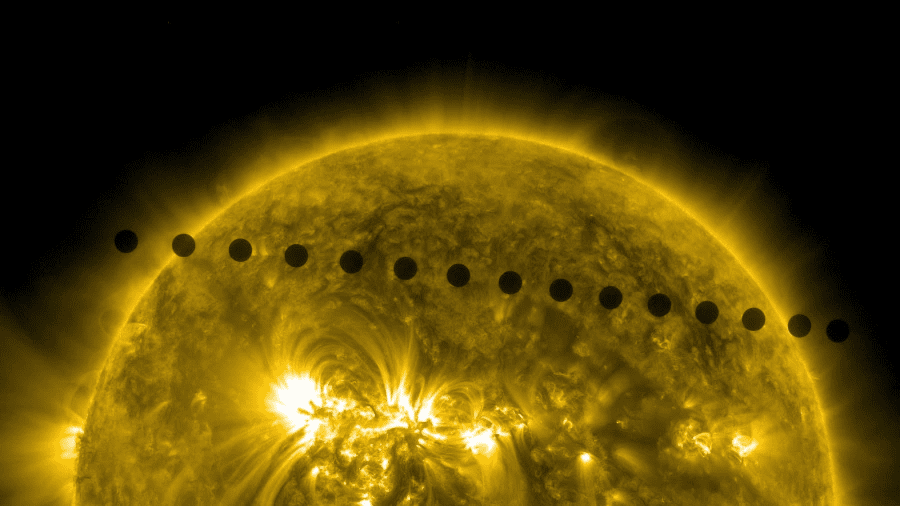
He also observed the transit of Venus on June 3, 1769. His work was done flawlessly, and it was highly estimated even by European scientists. The scientist used his work to calculate the distance from the Earth to the Sun.
David Rittenhouse was very enthusiastic about each of his projects. He tried to absorb every piece of information he received, understanding that it could later be useful in his discoveries. He maintained his perseverance in all his activities until his death, which occurred on June 26, 1796.