

The University of Pennsylvania has gained widespread recognition. Every year, countless applicants choose Penn for their education and further development. Who did provide the opportunity to study there, and how has education at the institution evolved? All this information and more can be found in the article at philadelphia1.one, which is dedicated to the history of the University of Pennsylvania.
The birth of the idea
In historical references, there is one name that often comes up that is even familiar to a child, namely Benjamin Franklin. This is not surprising, as besides being one of the Founding Fathers, he contributed significantly to the development of the city and the country. It is quite easy to understand that Franklin was directly involved in the establishment of the University of Pennsylvania.
One day, Benjamin Franklin decided to express his thoughts regarding education. The Founding Father wanted to open a college in the city that would not resemble those already existing in the English colonies at that time, like Harvard, William & Mary, Yale and Princeton. They were not bad institutions, but each focused on educating the clergy.
In contrast to these colleges, Franklin aimed to create something that would help students in their future lives. He knew that everyone would require knowledge in business and public service, as these fields became an integral part of life.
In 1749, Benjamin Franklin put all his thoughts and aspirations together and presented his own vision for the future school to the citizens. He made every effort to spread and prove the idea that the country needed innovation, and he was the one proposing it.
The Founding Father always got his way. Therefore, without wasting any time, a board of trustees was assembled. They began searching for a way to build an educational institution at a low cost.
Construction and operation of the institution
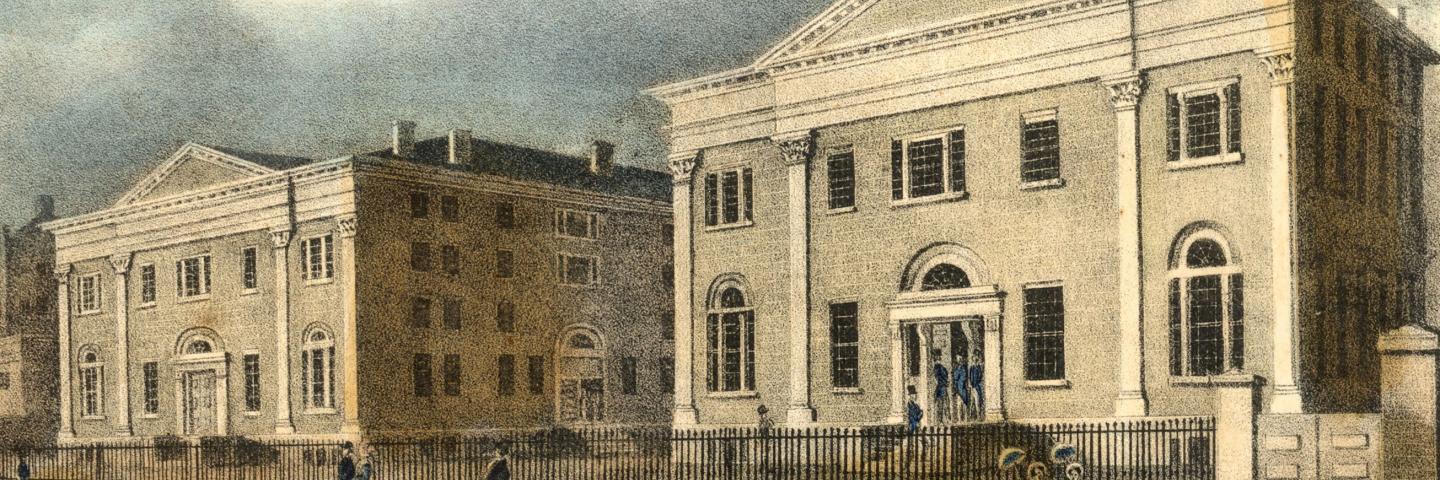
Franklin decided that the institution should be located on the site of an unfinished building known as the “New Building.” In 1740, the working class was expected to raise funds to start construction. It was to become a charitable school where poor children could study. A large preaching hall also had to be built. However, things went wrong, because they failed to raise enough funds, which led to a halt in the project.
This setback drew Franklin’s attention to the site. He was not a stupid man, and after calculating all the expenses and possibilities, he realized that it could be built quickly and cheaply. Franklin did not forget that due to a lack of funds, Philadelphia had not received a charitable school for the poor, so he implemented this idea. The presentation and opening of the new college in the city took place in 1751.
Obviously, a rector needed to be chosen for the newly established institution. Franklin took this matter into his own hands. He appointed William Smith to the position. It turned out that Benjamin did not make a mistake with his choice. Smith gave all of himself to the school and teaching. One could even say that he lived for the institution. The rector developed a new curriculum that included not only classical sciences but also pragmatic ones. He shared Franklin’s view on introducing innovative learning that would impact the development of colleges throughout all the English colonies.
The fact that he continued to teach even while in prison even more proves that Smith was committed to the school. The thing is that he protested against the policies of the popularly elected assembly. The authorities did not like it, which led to arrests. But despite this, Smith did not abandon his life’s work.
From college to university
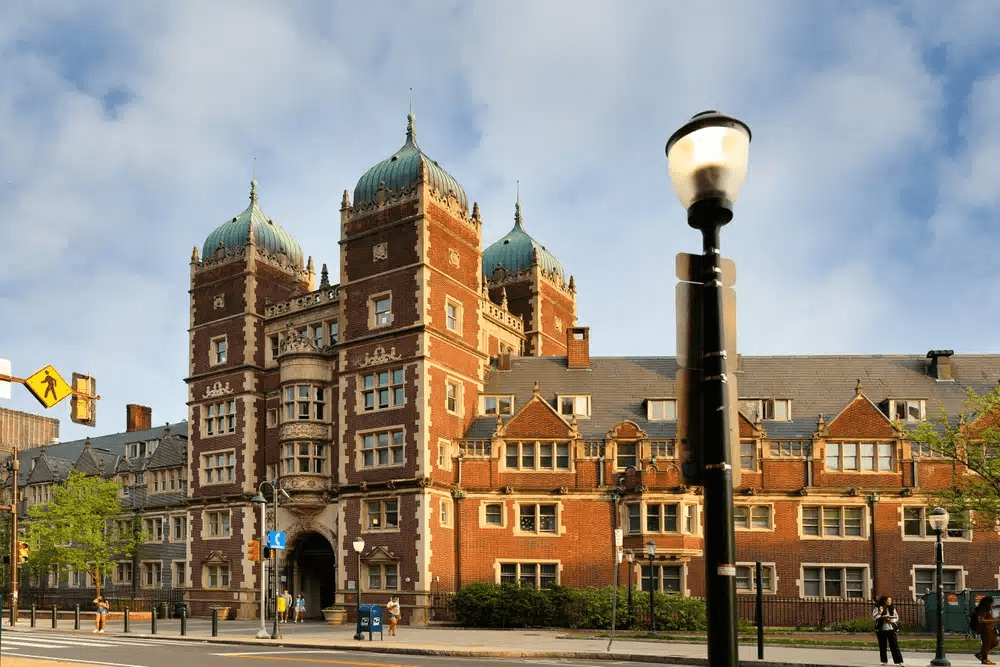
In 1779, the government of Pennsylvania took control of the college and turned it into a university. Thanks to this, America received its first state school and higher education institution. Already in 1791, the university got the name that everyone knows today, the University of Pennsylvania.
In 1790, the first lectures on law were held at the institution. Starting from the 18th century, the University of Pennsylvania flourished. It was the best time for every student. It is also important to note that all nine individuals who signed the Declaration of Independence were somehow connected to Penn.
The university did not preserve its initial location. The institution first moved to the President’s House in 1778, and then, in 1802 to Chestnut Street. However, this did not affect the quality of the institution.
The last move and changes
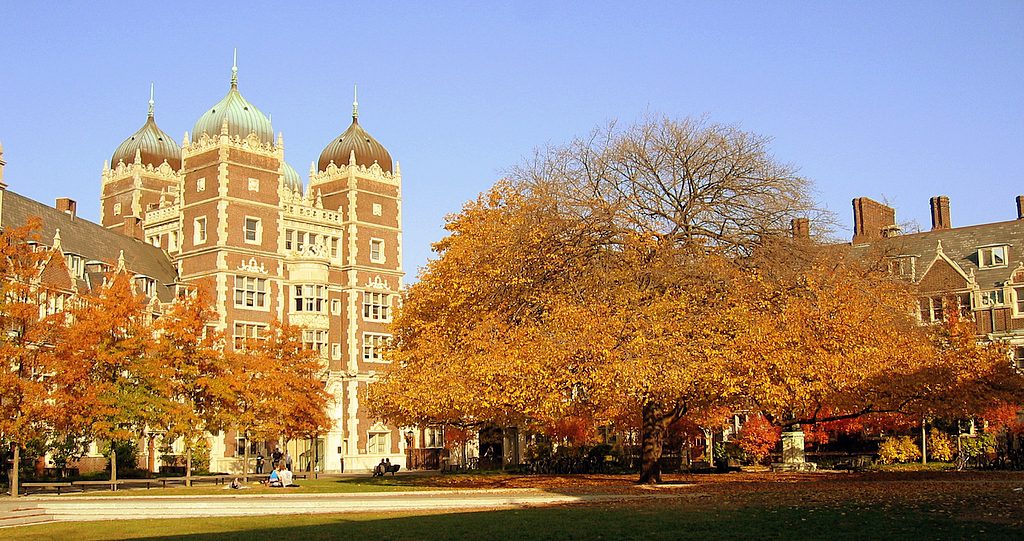
Since its founding, the university has established itself as a pedagogical institution. But when the German model of education began to influence the world, Penn also underwent changes. Over time, the establishment began conducting research, as the administration decided that the university should not only transfer knowledge to others but also create something of its own.
In 1872, the University of Pennsylvania’s campus was relocated once again, this time, to a farm located west of the Schuylkill River. It was the last time they moved because the institution can still be found in the same place in the 21st century.
The new territory gave impetus to the growth of the University of Pennsylvania. Vocational schools in various fields began to open, which still continue to function today. Women have had the opportunity to study at the institution since 1882. At the time, not every girl could get any kind of education.
The idea of creating something new led to a professional and renowned institution. The University of Pennsylvania is known not only within America but also abroad. This proves that the efforts Benjamin Franklin put into the cause were not wasted but exceeded any expectations.