

Maria Louisa Bustill Robeson was a well-known schoolteacher who was born and raised in Philadelphia. She married the Reverend William Robeson and moved to Princeton, New Jersey, where she worked and raised her children. The youngest of them, Paul Robeson, would become a world-famous football player, actor, and singer. Here is the story of this Philadelphia native’s life and career. Read more at philadelphia1.one.
The Bustill Family
Maria Louisa was born into the Bustill family on November 8, 1853, in Philadelphia, Pennsylvania. Her father was Charles Hicks Bustill, and her mother was Emily Robinson. They were prominent Quakers in the city. Interestingly, as a child, she was more often called Louisa, and this name became the one she primarily used.
Charles’s ancestors had gained their freedom in the mid-1700s. Louisa’s great-grandfather, Cyrus Bustill, was manumitted from slavery after his service to his owner in Burlington, New Jersey. He then made his way to Philadelphia, where he opened his own baking business. In 1787, he became a co-founder of the Free African Society.
As for her mother’s family, they had arrived in Pennsylvania from England at the very beginning of the colony’s founding. Therefore, Maria Louisa could be considered a native Philadelphian through and through.
Marriage and Her Path Forward
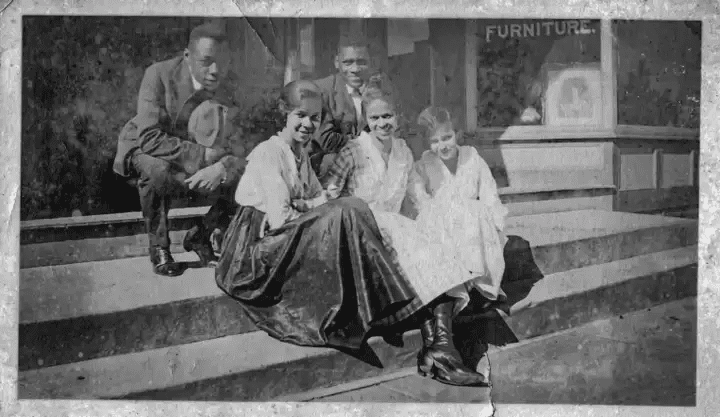
The Bustill family placed a high value on education for their children. That is why in the 1870s, Louisa and her sister Gertrude attended Lincoln University, one of the first historically Black colleges and universities (HBCUs) in the United States.
Louisa’s future husband also studied at the same university. They met during their student years. William Robeson had escaped from slavery in North Carolina when he was 15 years old. Along with his brother, he traveled to Philadelphia, which was then a popular destination for African Americans. During the U.S. Civil War, he worked for the Union Army and later enrolled in the university.
When William and Louisa began dating, she was already working as a teacher at the Robert Vaux School for children in the African American community. After William earned his bachelor’s degree in theology in 1878, the couple decided to marry. It should be noted that Louisa’s parents did not approve of the marriage, considering the match unsuitable. Louisa’s sister Gertrude also married a graduate of Lincoln University, but nothing is known about their subsequent life.
As for Louisa and William, he received an appointment as the Presbyterian minister of the Witherspoon Street Church in Princeton, New Jersey. The young couple moved to the city. Louisa took a job at a local school and also gave private lessons.
At that time, Princeton had a fairly large African American community. Many families had long been free and were building independent lives as they saw fit. Others were still enslaved. The town was closely tied to the southern states, and forced segregation was in effect. Therefore, the overall situation for African Americans was difficult. The Robeson family became involved in community initiatives and did everything they could to help those in need.
William and Louisa had seven children together, two of whom died in infancy. The parents prioritized education and tried to provide their children with the best possible future:
- Their first daughter, Gertrude Lascette, died shortly after her birth in 1880.
- William Drew Robeson Jr., born in 1881, became a doctor and practiced medicine in Washington, D.C.
- Benjamin, born in 1893, became a minister in the African Methodist Episcopal Zion Church in Harlem, New York.
- Marian, born in 1894, married a doctor named William Forsyth and returned with him to her mother’s native Philadelphia.
- John Reed, born in 1886, moved to Detroit as an adult, where he survived on odd jobs and ultimately died in poverty.
- Paul Robeson, born in 1898, became a famous football player, singer, and actor, as well as a prominent fighter for the civil rights of African Americans.
Another of William and Louisa’s children died at birth. The child’s name remains unknown.
In 1900, William faced open opposition from some of the white congregants at the Witherspoon church. The disputes had racial undertones, which was unfortunately a common practice at the time. The following year, despite the full support of the African American part of the congregation, he resigned from his position.
End of Life
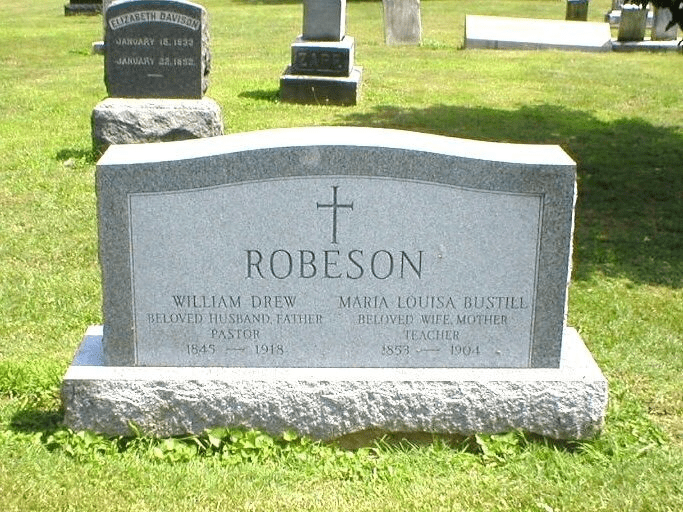
After William lost his job, life became much more difficult for the Robeson family. He struggled to support his family, taking any work he could find.
Meanwhile, Louisa was gradually losing her sight to cataracts. By 1904, she was almost completely blind. One day in the kitchen, a hot coal from the stove fell onto her clothing. She was engulfed in flames that were barely extinguished. She suffered burns over 80% of her body and died a few days later. Louisa was 50 years old. She was buried in a local cemetery.
Her youngest son, Paul, was only 6 years old at the time. With almost no money left, William moved with his children into the attic of a store in Westfield. Gradually, he managed to improve their situation and raise the children. He never remarried, and after his death in 1918, he was buried next to his wife.