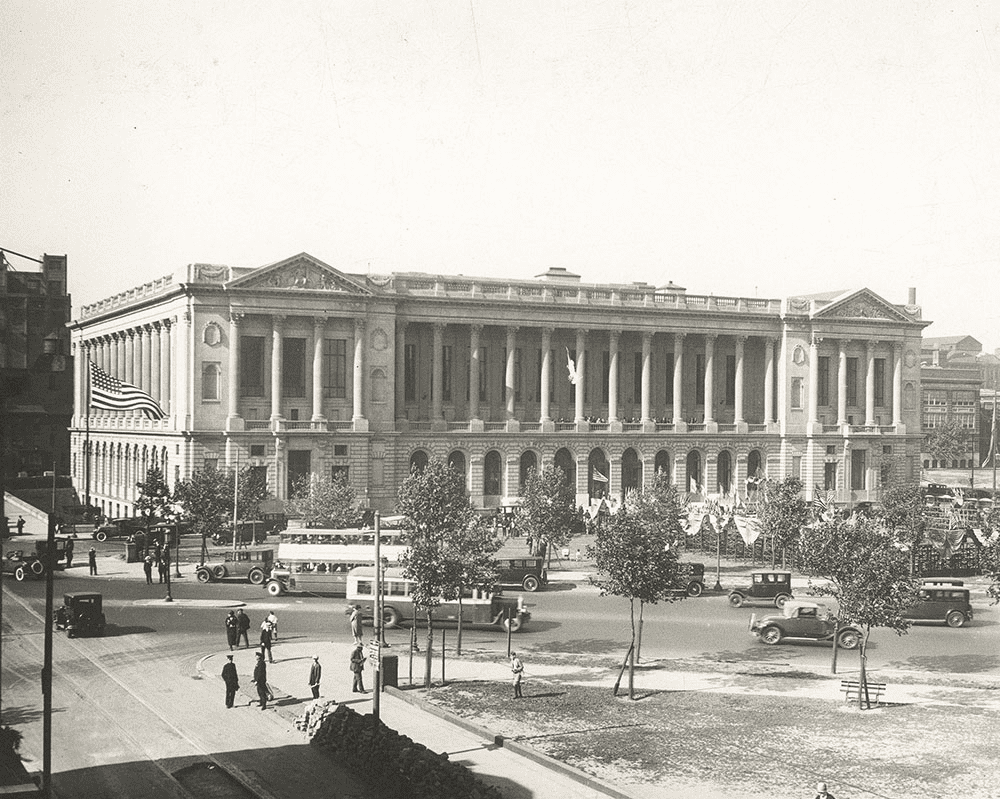
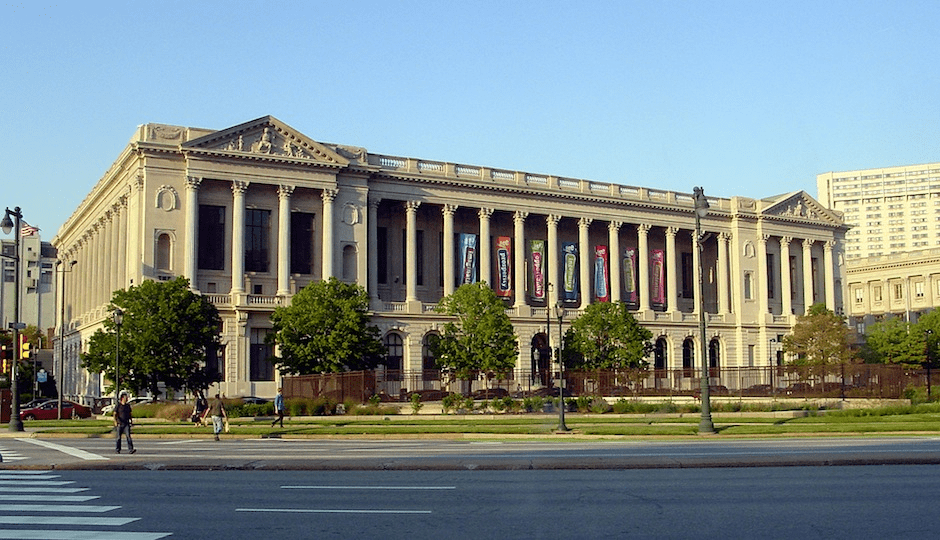
One of the largest public educational buildings and the headquarters of the Free Library project in the City of Brotherly Love – that’s the Central Library of Philadelphia. The building emerged in the late 19th century and has a long, storied history, yet it still maintains its prominence today. To learn more about this unique Philadelphia educational institution – when it was founded, its development, and its modern era – keep reading on philadelphia1.one.
The Library’s Origins and Development
William Pepper had a singular dream: to create a system of libraries accessible to everyone, regardless of their financial status, skin color, or social standing. He also had an ailing uncle who, upon his death, left his only relative a substantial inheritance – over two hundred thousand dollars. As you might have guessed, Mr. Pepper invested these funds into his dream.
In 1894, that goal became a reality when the first free library appeared in the City of Brotherly Love. The building was constructed as part of a major initiative to popularize such educational institutions throughout the city.
This initial “demo version” of the library was first located in City Hall, where it occupied just three rooms. Only a year later, it expanded by moving to Chestnut Street. However, the new building turned out to be quite neglected, leading to another relocation a couple of years later.
After a series of historical events and financial crises in the first half of the 20th century, the public library finally found its permanent home. Its construction was championed by the legendary architect and Philadelphia native, Horace Trumbauer.
In early summer 1927, at its current address, 1901 Vine Street, the educational building officially opened its doors. This structure also became the headquarters for the entire Free Library of Philadelphia project. Until 2016, the library utilized a lift system similar to the one at the New York Public Library to retrieve books from its vast collections. In 2014, books from the archives were transferred to a regional operational center, accessible only to Free Library project staff. In the spring of 2019, the library underwent its first major renovation in a long time, resulting in the establishment of three new departments.
The Library’s Modern Era and Structure
As of 2023, one of America’s largest public educational institutions and Philadelphia’s most renowned library continues to operate.
Following the previously mentioned renovation, “Philbrick Hall” was established within the book-filled building. This department, dedicated entirely to fiction, greets visitors on the first floor. Also in 2019, “Pepper Hall” was introduced as a literature and arts department, along with the “Center for Culinary Literacy” – a versatile space for everything from business meetings to relaxation, all within this unique “educational dining hall.”
Among the public library’s main highlights is, undoubtedly, its Rare Book Department. Here, you can explore truly unique manuscripts from, for example, the time of the famous English writer Charles Dickens. In his honor, there’s an entire collection of unpublished works and even a replica of the artist’s raven. Additionally, in this cultural Philadelphia landmark, visitors can connect with the past lives of the city’s residents and everything that surrounded them. Beyond literature, this includes religious texts, foreign documents, and works from the American Civil War era. Unique collections also exist on topics such as cinema, music, sports, politics, medicine, and more.
Drexel University in Philadelphia is a private research university, founded through the initiative of financier and philanthropist Anthony Joseph Drexel....
Drexel University in Philadelphia is a private research university, founded through the initiative of financier and philanthropist Anthony Joseph Drexel....
The development of the postal service in the United States is deeply connected to Philadelphia. It was here that the Second Continental Congress brought...
The United States established its own national monetary system in 1792. Before that, foreign coins, various currencies, and money issued by individual states were...
The work of renowned philanthropist Andrew Carnegie fundamentally transformed access to knowledge in the United States. In the late 19th century, Carnegie launched his...