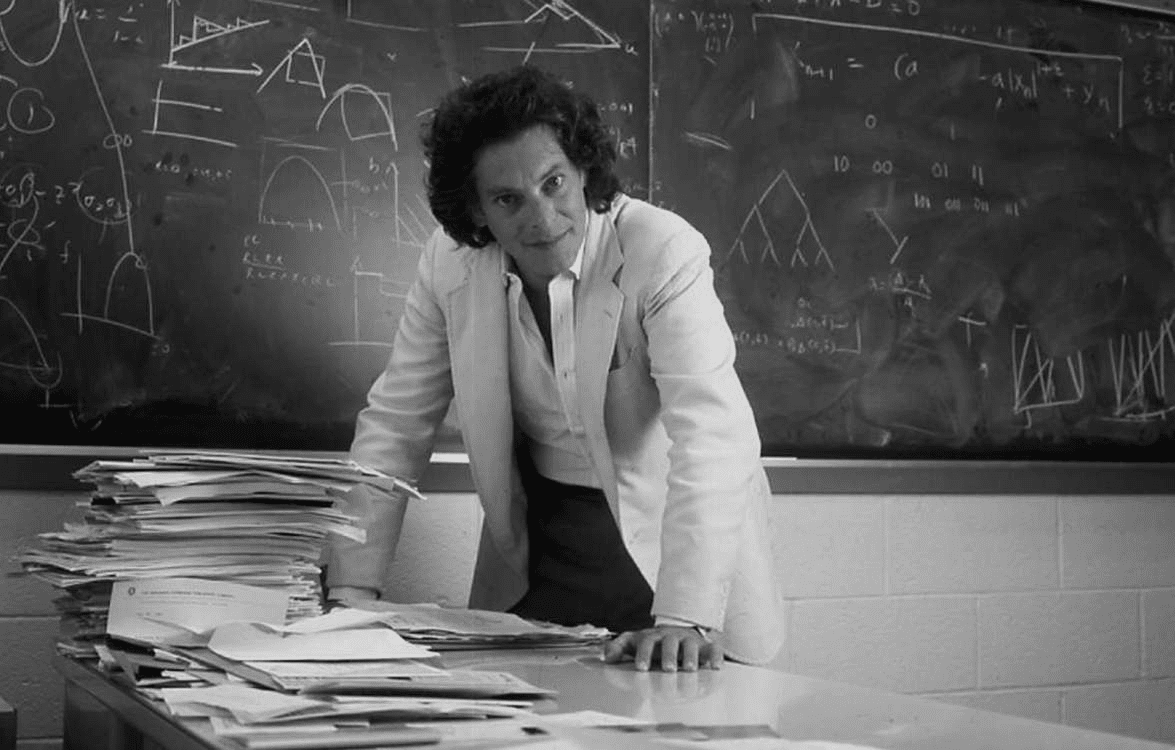
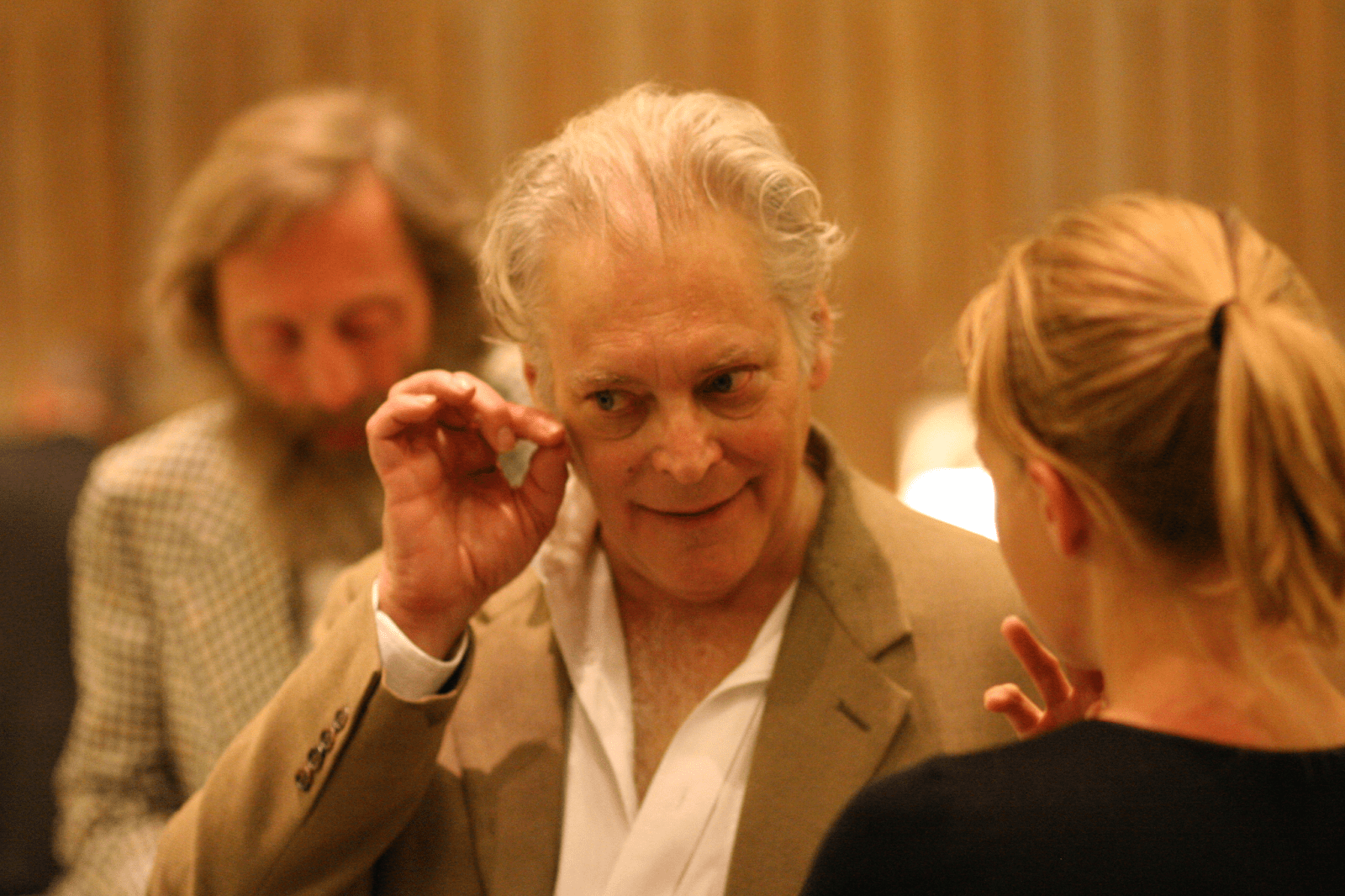
This talented scientist hails from the City of Brotherly Love. His research has already become part of history, transforming scientific approaches in the second half of the 20th century. Read on at philadelphia1.one to learn more about how this young man from a family of Polish-Ukrainian immigrants achieved success in the United States, where he was educated, and what made him stand out.
First Steps and the Shaping of a Scientist’s Career
In the winter of 1944, Mitchell J. Feigenbaum was born in Philadelphia to an ordinary family of Eastern European immigrants. He grew up there, completing his secondary education in New York. Fascinated by his family’s radio, he initially aimed to become an electrical engineer, but after earning his higher education, he developed a passion for physics. Mitchell J. subsequently decided to pursue graduate studies in that very field.
Mitchell Feigenbaum later began his career as a lecturer, working at several American higher education institutions. Notably, it was at Rockefeller University that Professor Mitchell started working on the theory of turbulent fluids.
Towards the end of the aforementioned century, Feigenbaum dedicated all his free time to science, specifically to in-depth theoretical research that unveiled new understandings. This was also aided by a grant he won with his partner and lecturer, Albert Libchaber.
What Made the Scientist Memorable?
Most of his life, the Pennsylvania native dedicated himself to detailed investigations of the phenomenon known as chaos. The physicist sought to mathematically define this non-standard behavior.
The second half of the twentieth century is memorable for the Philadelphia scientist because, using a small calculator, he discovered a crucial axiomatic solution to chaos theory. To explain the importance of his research in simple, everyday terms, one could say that Mitchell was perhaps the only one who could provide a mathematical argument for this fact. He offered mathematical specialists a kind of “map” they could follow to unravel the insoluble behavior of chaotic systems. And, the “convergence coefficient” that Feigenbaum researched has since been named in his honor.
The native of the City of Brotherly Love also contributed to the creation of a new method for studying parts of a whole in cartography. He did this during his collaboration with American scientist and cartographer, Hammond. In the process of their joint work, the scientists were able to create software that changed the representation of coastlines, terrestrial land boundaries, and mountain ranges relative to the variety of map scales and projections. Professor Mitchell pioneered a computerized program that could mark over 1000 features on a map in just a few minutes. Thanks to this invention, specialists significantly reduced the time spent on such work.
In 1996, with the assistance of Michael Goodkin, the Philadelphia mathematician launched the “Numerix” program. This program was able to determine prices for exotic financial derivatives and structured commodities using the Monte Carlo method.
Mitchell played a crucial role in the establishment of the Rockefeller Center for Physics and Biology Research, a pioneering interdisciplinary initiative aimed at expanding the scope of discussions at Rockefeller and providing access to cutting-edge theoretical sciences. Thanks to the scientist, the center consolidated unique physicists within a group of biologists and united them with independent staff focused on theoretical or computational science, serving as a model for similar programs created elsewhere ever since.
His colleagues in the field highlight Mitchell J.’s incredible creative mind, which made an unforgettable impression on those who met him and inspired a large circle of devoted friends.
On June 30, 2019, at the age of seventy-four, Mitchell Feigenbaum passed away. In addition to his works and research, he left behind accolades such as the Wolf Prize and the status of a MacArthur Foundation Fellow.
Drexel University in Philadelphia is a private research university, founded through the initiative of financier and philanthropist Anthony Joseph Drexel....
The development of the postal service in the United States is deeply connected to Philadelphia. It was here that the Second Continental Congress brought...
The United States established its own national monetary system in 1792. Before that, foreign coins, various currencies, and money issued by individual states were...
The work of renowned philanthropist Andrew Carnegie fundamentally transformed access to knowledge in the United States. In the late 19th century, Carnegie launched his...